


Visit the Beaujolais Wine Region: The Complete Guide 2026

If I had to name the most underrated wine region in France, it would be the Beaujolais. Having spent time in the region and in nearby Lyon, I’ll say it plainly: for me, the granite hills of the Beaujolais wine region are as beautiful as Piedmont — rolling vineyards, golden-stone villages, and a quiet authenticity that the more famous regions have started to lose. And the wine? Vastly underestimated. The world still thinks of Beaujolais Nouveau, but the 10 crus of the northern Beaujolais make some of the best-value, most age-worthy red wine in France.

Just north of Lyon and at the southern tip of Burgundy, the Beaujolais is a single-grape region — Gamay — grown on granite and schist soils that give the wines their signature lift. With the Winalist team, we work with the growers and châteaux who are quietly turning Beaujolais into one of France’s most exciting wine destinations. In this guide, we’ve put together everything you need to plan a trip: the crus, the villages, the best wineries, when to come, how to get there, and the addresses we actually recommend to friends.

The essentials for visiting the Beaujolais wine region
  • Beaujolais in brief: a French wine region just north of Lyon, at the southern end of Burgundy. ~35,000 acres (14,000 ha) of vines on granite and schist hills. 12 appellations, including 10 named crus.
  • One grape: Gamay (for the reds, ~98% of production), plus a little Chardonnay for the rare Beaujolais Blanc. Wines made largely by carbonic maceration, which gives that fresh, fruity style.
  • The 10 crus: Morgon, Fleurie, Moulin-à-Vent, Brouilly, Côte de Brouilly, Chiroubles, Régnié, Saint-Amour, Juliénas, Chénas — the top tier, meant to age up to 10 years.
  • Ideal stay: 2 days for the crus and a couple of villages, 3–4 days to combine with Lyon and the southern Pierres Dorées (golden-stone) villages.
  • Must-sees: the 10 crus wine route, the Pierres Dorées villages (Oingt, Bagnols), Mont Brouilly, Villefranche-sur-Saône, the Hameau Duboeuf wine theme park, nearby Lyon.
  • Local cuisine: Lyonnaise bistro food — andouillette, coq au vin, charcuterie, Saint-Marcellin cheese — paired with a chilled cru Beaujolais.
  • Access: 45 min by car or train from Lyon, 2h by TGV from Paris to Lyon then local train, ~25 mi (40 km) north of Lyon.
  • Budget for two: $300–$520 (€280–480) for a comfortable weekend, $750–$1,400 (€700–1,300) for a premium 3-day stay including Lyon dining.
Table of Contents

The vineyards and wineries to visit in Beaujolais

The Beaujolais wine region counts around 1,800 growers working the granite hills, from historic estates like Château des Jacques and Clos de la Roilette to small family domaines pouring great Gamay for €10 a tasting. The late Georges Duboeuf — the “king of Beaujolais” — put the region on the world map from his base in Romanèche-Thorins, where the Hameau Duboeuf wine theme park still draws visitors. Most winery visits last 1–2 hours and end with a tasting of 3 to 6 cuvées. Expect $15–$45 (€12–40) for a standard visit, more for a vertical tasting of age-worthy crus at a top château.

Book a Beaujolais wine tour

What to do in the Beaujolais wine region? Top 10 must-sees

Here’s our pick of the must-sees and best things to do across the Beaujolais wine region — a mix of crus, golden-stone villages, vineyards and Lyonnaise experiences we’d recommend to a friend.


1. Drive the 10 crus wine route

The heart of any Beaujolais trip. The 10 crus — Morgon, Fleurie, Moulin-à-Vent, Brouilly, Côte de Brouilly, Chiroubles, Régnié, Saint-Amour, Juliénas, Chénas — are clustered in the northern half of the region, each a single named appellation on its own granite hill. (Read our Beaujolais wine route guide)


2. Taste Moulin-à-Vent — the “king of Beaujolais”

The most structured, age-worthy cru, named after a 15th-century windmill that still stands among the vines. Moulin-à-Vent wines have the structure and complexity to age up to 10 years — closer to red Burgundy than to simple Beaujolais. Château des Jacques is the reference estate.


3. Climb Mont Brouilly

The volcanic hill at the southern end of the crus, topped by the Notre-Dame-aux-Raisins chapel. The climb gives you the best panorama in the Beaujolais — vineyards rolling in every direction, with the Alps visible on a clear day. Brouilly and Côte de Brouilly are the two crus on its slopes.


4. Wander the Pierres Dorées (golden-stone) villages

The southern half of the region is known as the Pays des Pierres Dorées — the land of golden stones. Villages like Oingt (one of Les Plus Beaux Villages de France), Bagnols, Ternand and Châtillon glow honey-gold in the afternoon sun. This is the Beaujolais that reminds me of Piedmont.


5. Visit a Fleurie or Morgon domaine

Fleurie is the most floral, elegant cru — “the queen of Beaujolais”. Morgon is the most powerful, with its famous Côte du Py slope. Both are perfect for a tasting at a small grower, where the Gamay shows aromas of cherry and violet and a depth that surprises first-timers.

💡 Tip: to book a winery visit in Beaujolais with tasting, browse Winalist’s selection of partner domaines across the 10 crus.


6. Discover the Hameau Duboeuf
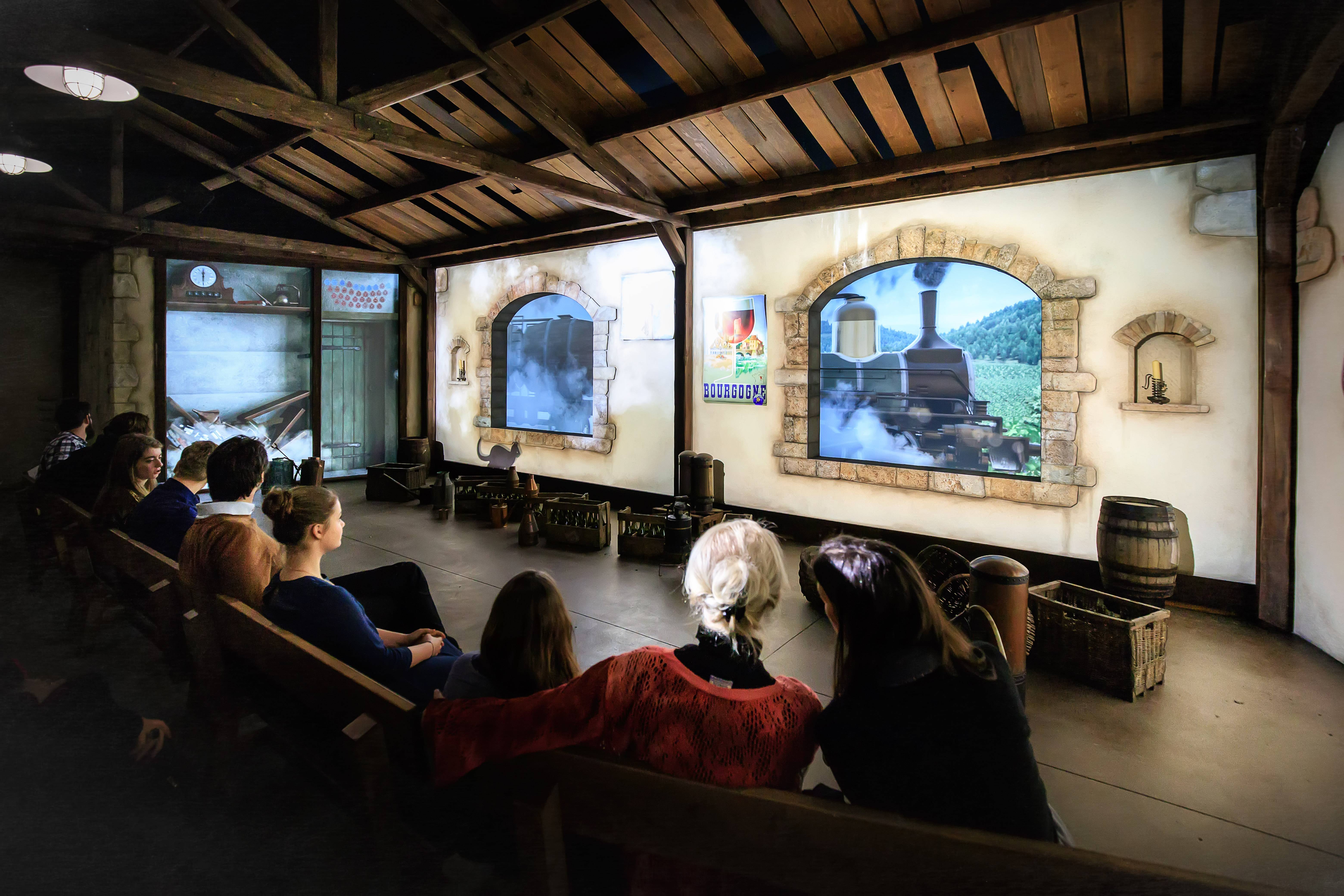
France’s largest wine theme park, in Romanèche-Thorins. A fun, family-friendly journey through the history of Beaujolais and winemaking — train carriages, gardens, a cinema and tastings. Created by Georges Duboeuf, the man who made Beaujolais Nouveau a global phenomenon.


7. Celebrate Beaujolais Nouveau (third Thursday of November)

The most famous wine party in the world. On the third Thursday of November, the year’s Beaujolais Nouveau is released at midnight — “Le Beaujolais Nouveau est arrivé!” — and the whole region celebrates. If you visit in November, the villages are alive with tastings, music and feasts.


8. Eat in a bouchon Lyonnais

The Beaujolais is Lyon’s backyard, and the gateway to the world’s best bistros. Andouillette, coq au vin, quenelles, charcuterie and Saint-Marcellin cheese — all designed to pair with a chilled glass of cru Beaujolais. Many growers keep a table for visitors.


9. Explore Villefranche-sur-Saône and Beaujeu


Villefranche-sur-Saône is the modern capital of the Beaujolais, with a handsome Renaissance main street. Beaujeu, the historic capital that gave the region its name, hosts the Sarmentelles — the biggest Beaujolais Nouveau festival, five days of celebration.


10. Combine with a day in Lyon


France’s gastronomic capital is just 45 minutes south. A Beaujolais trip pairs perfectly with a day in Lyon — the Renaissance old town, the traboules, the Fourvière basilica, and of course the food. Many travellers base themselves in Lyon and day-trip into the vineyards.


Our itineraries for visiting the Beaujolais wine region

Depending on how much time you have, several itineraries work well: a day trip from Lyon to the 10 crus; a 2-day weekend combining the crus in the north with the Pierres Dorées villages in the south; a 3–4 day stay adding Lyon and its bouchons; or a visit timed for the third Thursday of November to experience Beaujolais Nouveau at its source.

When to visit the Beaujolais wine region?

Spring (April–June)

Mild weather, vines waking up, fewer visitors. A lovely time to drive the crus route and walk the golden-stone villages without crowds.

Summer (July–August)

Warm and lively, with long evenings perfect for terrace tastings. The granite hills can get hot at midday — start early. Many growers run summer open days and vineyard picnics.

Harvest (September)

The most atmospheric time. Unlike most of France, Beaujolais is hand-harvested by law — so the grapes are harvested by teams of pickers across the hills in September, a beautiful sight. Expect a buzzing, busy region.

Beaujolais Nouveau (November)

The region’s signature moment. On the third Thursday of November, the new vintage is released at midnight and the whole Beaujolais celebrates — the Sarmentelles in Beaujeu run for five days. A unique time to visit.

Winter (December–March)

Quietest season. Some small domaines close in deep winter, but the bigger châteaux and Lyon’s restaurants run year-round.

How to get to the Beaujolais wine region?

By train + car (recommended)

  • TGV Paris Gare de Lyon → Lyon in 2h, then 45 min by car north to the crus
  • TGV Paris → Mâcon-Loché TGV in 1h45, then 30 min by car south to the crus
  • TER regional Lyon → Villefranche-sur-Saône in 20 min
  • TER regional Lyon → Belleville-en-Beaujolais (gateway to the crus) in 30 min

By plane

  • Lyon-Saint-Exupéry airport (LYS) is the closest international hub, ~1h from the crus by car
  • Geneva and Paris airports are alternatives for international travellers

By car

  • Lyon → the crus (Brouilly): ~30 mi (50 km), 45 min via the A6
  • Mâcon → Saint-Amour: ~12 mi (20 km), 20 min
  • Villefranche-sur-Saône → Fleurie: ~20 mi (32 km), 35 min

Getting around

  • Car: essential to explore the crus and the Pierres Dorées villages — most domaines are not served by public transport.
  • Bike: the granite hills are a favourite for cyclists, with marked vineyard routes between the crus.
  • Guided tours with driver: many Winalist partners offer half-day and full-day Beaujolais tours from Lyon with transport included — the easiest way to taste freely.

Where to stay in the Beaujolais wine region?

Charm and luxury

  • Château de Bagnols (Bagnols): a spectacular 5-star Relais & Châteaux in a restored medieval château in the Pierres Dorées, with a Michelin-starred restaurant.
  • Château de Pizay (Saint-Jean-d’Ardières): 4-star château hotel with its own vineyard and spa, in the heart of the crus.
  • Les Maritonnes Parc & Vignoble (Romanèche-Thorins): charming hotel next to the Hameau Duboeuf, surrounded by Moulin-à-Vent vines.

Wine-country guesthouses

Across Fleurie, Morgon, Juliénas and the Pierres Dorées villages: many chambres d’hôtes run by winemaker families, often with a tasting of their own cuvées at breakfast. Expect $90–$160 (€85–150) per night with breakfast — the most authentic way to stay in the wine region.

For a different kind of Beaujolais experience

Vineyard cabins, golden-stone gîtes in the Pierres Dorées, and the option of basing yourself in Lyon for city comfort with the vineyards a short drive away. Plenty of options for trips with family or friends.

Good to know before visiting Beaujolais

  • Where is the Beaujolais wine region in France?

    The Beaujolais wine region is in eastern France, just north of Lyon and at the southern end of Burgundy. It stretches across ~35,000 acres (14,000 hectares) of granite and schist hills between the Saône valley and the Monts du Beaujolais, about 45 minutes by car from Lyon.
  • What is Beaujolais wine?

    Beaujolais is a French wine made almost entirely from a single red grape, Gamay, grown on granite soils. Most is light-bodied and fruity, often made by carbonic maceration for a fresh style, but the 10 crus in the north produce more structured, age-worthy wines that drink like red Burgundy. The region also makes a little white Beaujolais Blanc from Chardonnay.
  • What are the 10 crus of Beaujolais?

    The 10 crus are the top appellations of the region, each on its own granite hill in the northern half: Brouilly, Côte de Brouilly, Régnié, Morgon, Chiroubles, Fleurie, Moulin-à-Vent, Chénas, Juliénas and Saint-Amour. Moulin-à-Vent ("the king") and Morgon are the most structured and age-worthy; Fleurie ("the queen") is the most floral; Saint-Amour is the northernmost.
  • What is the difference between Beaujolais and Beaujolais Nouveau?

    Beaujolais Nouveau is a young wine released just weeks after harvest, on the third Thursday of November — fresh, fruity and meant to drink immediately. It's only a fraction of the region's output. The serious wines are the 10 crus and Beaujolais-Villages, which are aged and can develop for years.
  • What to do in the Beaujolais in 2 days?

    Day 1: drive the 10 crus route in the north — Brouilly, Morgon, Fleurie, Moulin-à-Vent — with two or three tastings and a climb up Mont Brouilly. Day 2: explore the golden-stone Pierres Dorées villages in the south (Oingt, Bagnols), then finish with dinner in a Lyonnaise bouchon.
  • Is Beaujolais part of Burgundy?

    Geographically and administratively the Beaujolais sits at the southern end of Burgundy, and historically it has been linked to it. But its single grape (Gamay, not Pinot Noir), its granite soils and its own 12 appellations give it a distinct identity. Most wine authorities treat Beaujolais as a region in its own right, apart from Burgundy.
  • When is the best time to visit Beaujolais?

    April to October is ideal for the vineyards and golden-stone villages, with September (the hand-harvest) the most atmospheric. Mid-November is unique for the Beaujolais Nouveau celebrations. Pair any visit with Lyon, just 45 minutes south.
  • How do you get to Beaujolais from Lyon?

    Lyon is the natural gateway: the crus are about 45 minutes north by car via the A6. By train, TER regional services run from Lyon to Villefranche-sur-Saône (20 min) and Belleville-en-Beaujolais (30 min). From Paris, take the TGV to Lyon (2h) or to Mâcon-Loché (1h45), then a short drive into the vines.
CEO at 

Born and raised in Champagne, Nicolas has since explored wine regions across Europe and the Americas. Now CEO of Winalist, he helps the editorial team uncover the hidden gems worth traveling for.

Travel Blogger at 

Travel & Wine Writer at Winalist, Charlotte has spent years exploring Europe's wine regions and telling the stories of the people behind the bottles. Based between France and the Netherlands, she brings an international perspective to wine tourism.

Winalist is Europe's n°1 platform to book winery visits, tastings and wine tourism experiences. 2,000+ handpicked producers. Free booking and cancellation, instant confirmation.

Discover Winalist
CEO at 

Born and raised in Champagne, Nicolas has since explored wine regions across Europe and the Americas. Now CEO of Winalist, he helps the editorial team uncover the hidden gems worth traveling for.

Travel Blogger at 

Travel & Wine Writer at Winalist, Charlotte has spent years exploring Europe's wine regions and telling the stories of the people behind the bottles. Based between France and the Netherlands, she brings an international perspective to wine tourism.
All our travel guides for Beaujolais