


Dreaming of a sun-drenched escape packed with history, flavor, and volcanic energy? Welcome to Catania Sicily, a city that hums with life between the Ionian Sea and the fiery slopes of Mount Etna. From baroque palaces and lava-carved streets to chaotic fish markets and UNESCO sites, there’s always something to taste, see, or photograph. The local vibe is intense but unforgettable: bold like a glass of Etna Rosso, proud like the Roman ruins, and comforting like a plate of pasta alla Norma. This guide to Catania will help you dive into it all, including the best street food, cultural must-sees, and nearby Sicily wine tours & wineries that make the region a paradise for wine lovers. Take a day trip from Taormina, tour Etna’s lunar landscapes, or build your ultimate Sicily itinerary, just don’t skip Catania.
Visit Catania Italy and the best things to do
Wander at Piazza del Duomo
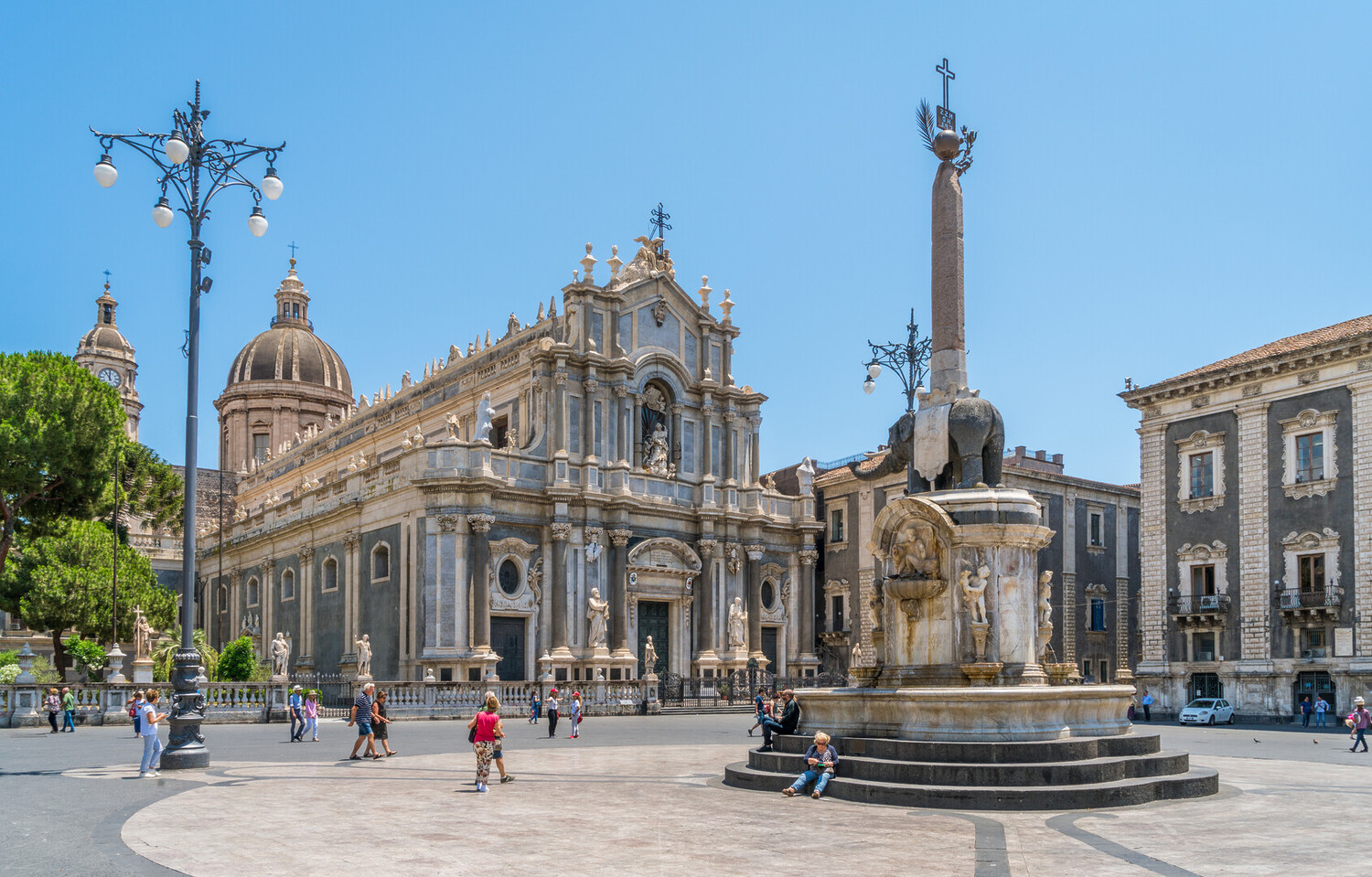
Kick off your Catania adventure at Piazza del Duomo, the city’s beating heart and a perfect intro to its bold personality. Right in the center stands the Elephant Fountain, an iconic lava-stone statue that’s part symbol, part legend, and all Sicilian. Surrounded by baroque facades and the grand cathedral, this UNESCO-listed square pulls together everything Catania does best: history, myth, and volcanic flair.
Visit the magnificent Catania Cathedral
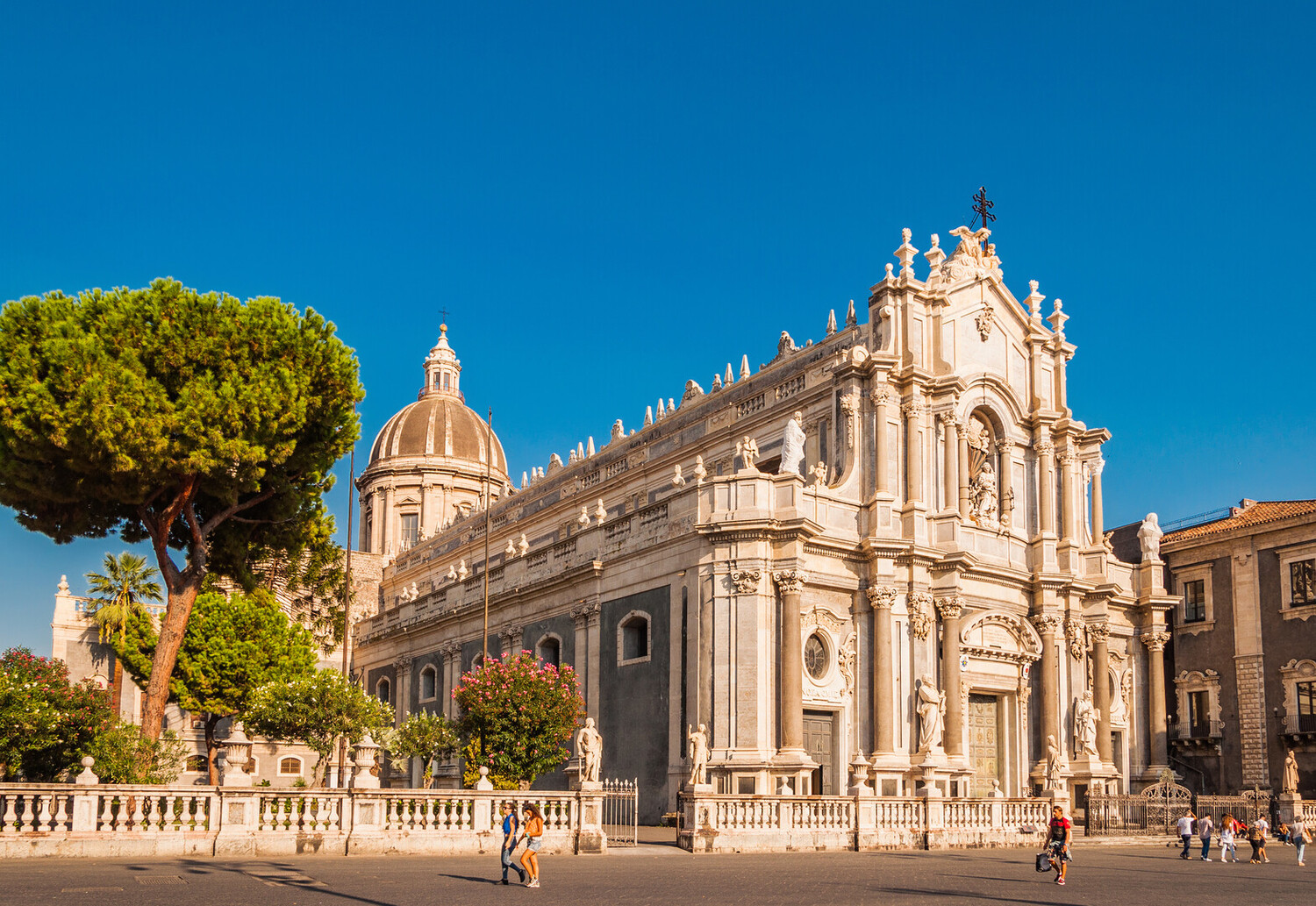
Rising above the square, the Catania Cathedral honors Saint Agatha, the city’s beloved patron saint. Its dramatic baroque facade and richly decorated interior make it a must on any visit to the city. Inside, you’ll find the relics of Agatha herself, deeply revered by locals. Time your trip for February 5 and you’ll catch one of Sicily’s most powerful celebrations, when the entire city lights up to honor its saint with fireworks, processions, and centuries-old devotion.
Walk to Via Etnea for shopping and sky views
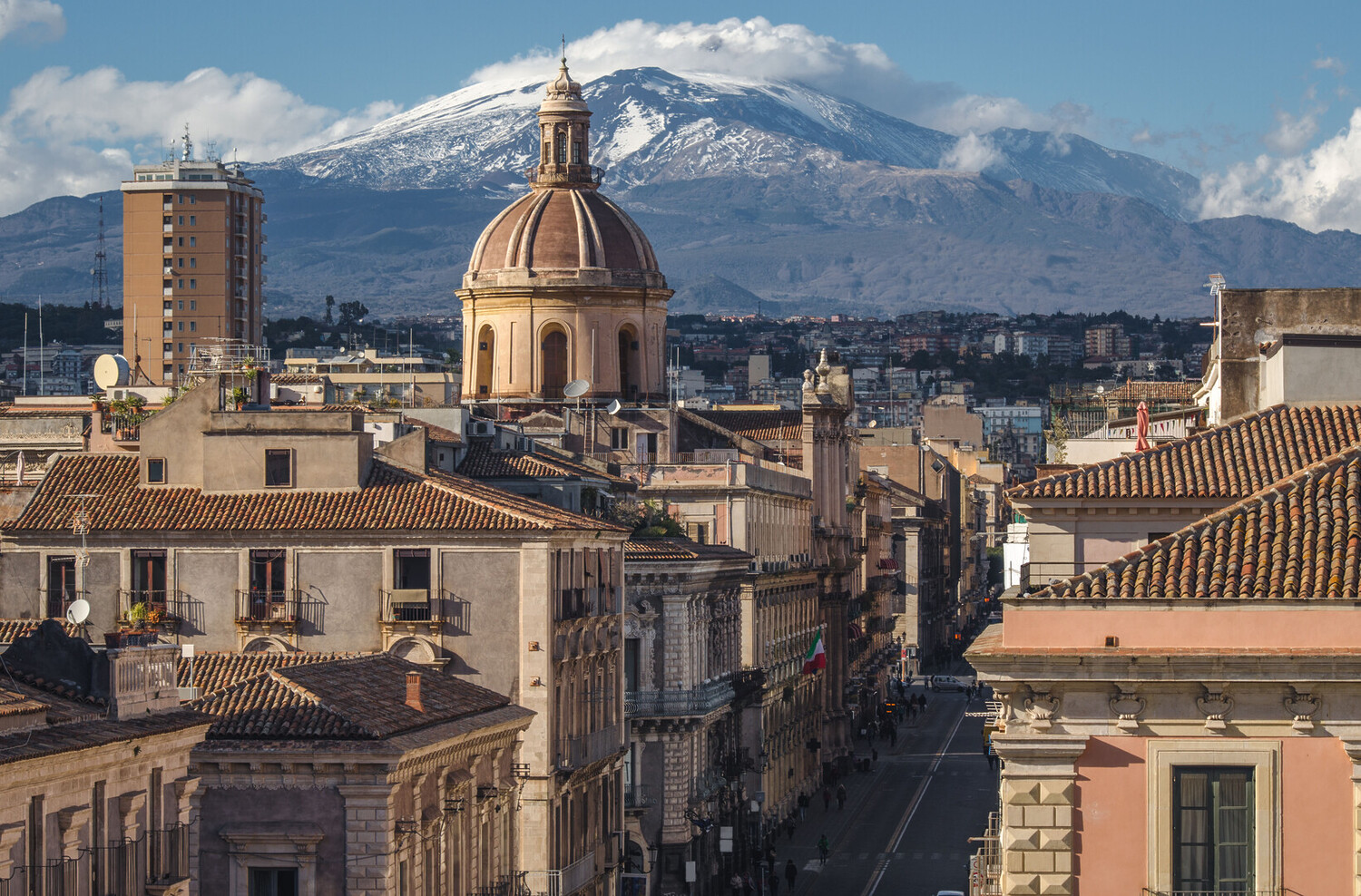
Via Etnea is Catania’s main artery, a straight shot through the city lined with Sicilian boutiques, lively cafés, and a front-row view of Mount Etna on clear days. Paved with dark local lava stone, the street turns a casual stroll into a walk across the city’s volcanic past. It’s the kind of place where you can shop for handmade ceramics, grab a coffee, and feel the mountain watching over you.
Discover Roman drama at the Teatro Romano
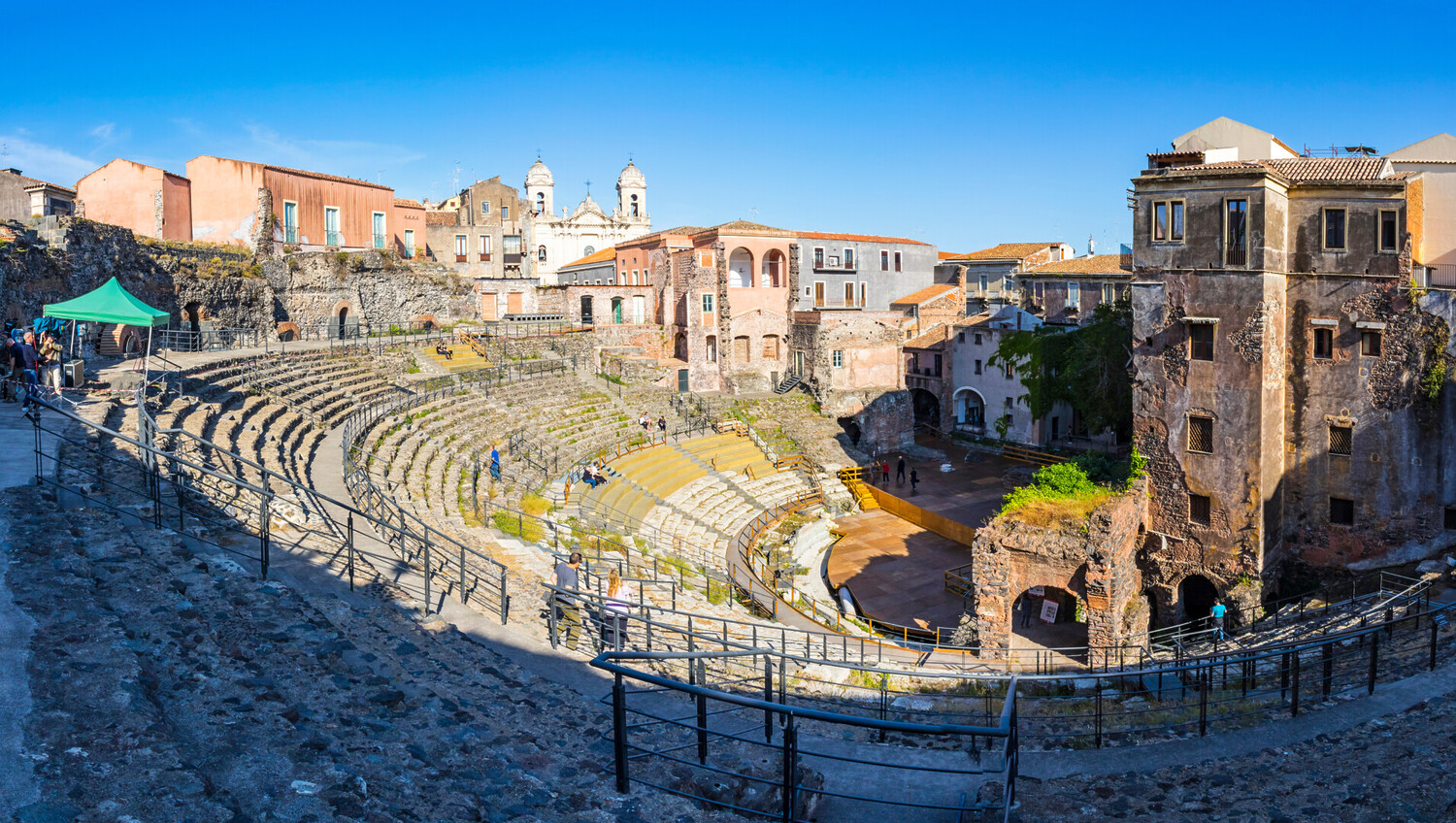
Hidden in plain sight in Catania’s old town, the Teatro Romano and Odeon pull you straight into the Roman Empire. Built from black lava stone and stacked with centuries of history, these ruins once echoed with music, drama, and ritual. You can walk through the curved steps, touch ancient walls, and spot traces of earlier Greek foundations and later Byzantine tweaks. It’s one of Catania’s most underrated treasures, perfect if you want more than just a photo stop.
Visit the lavish Palazzo Biscari
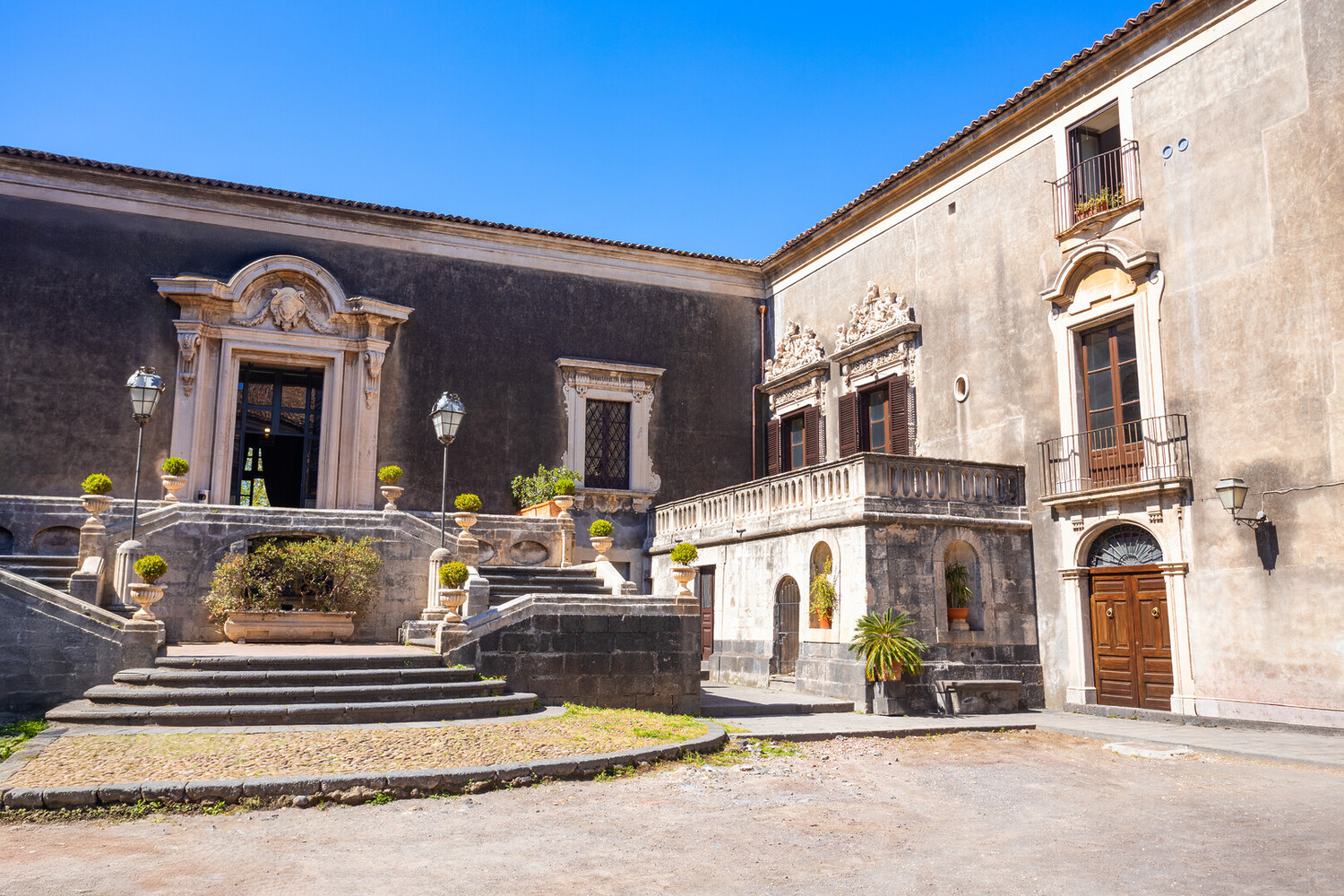
Palazzo Biscari is pure Sicilian baroque drama, ornate, opulent, and still privately owned by the same noble family that built it. Step inside and you’re met with mirrored halls, hand-painted frescoes, and marble staircases made for grand entrances.
Experience the flavors of the Catania fish market
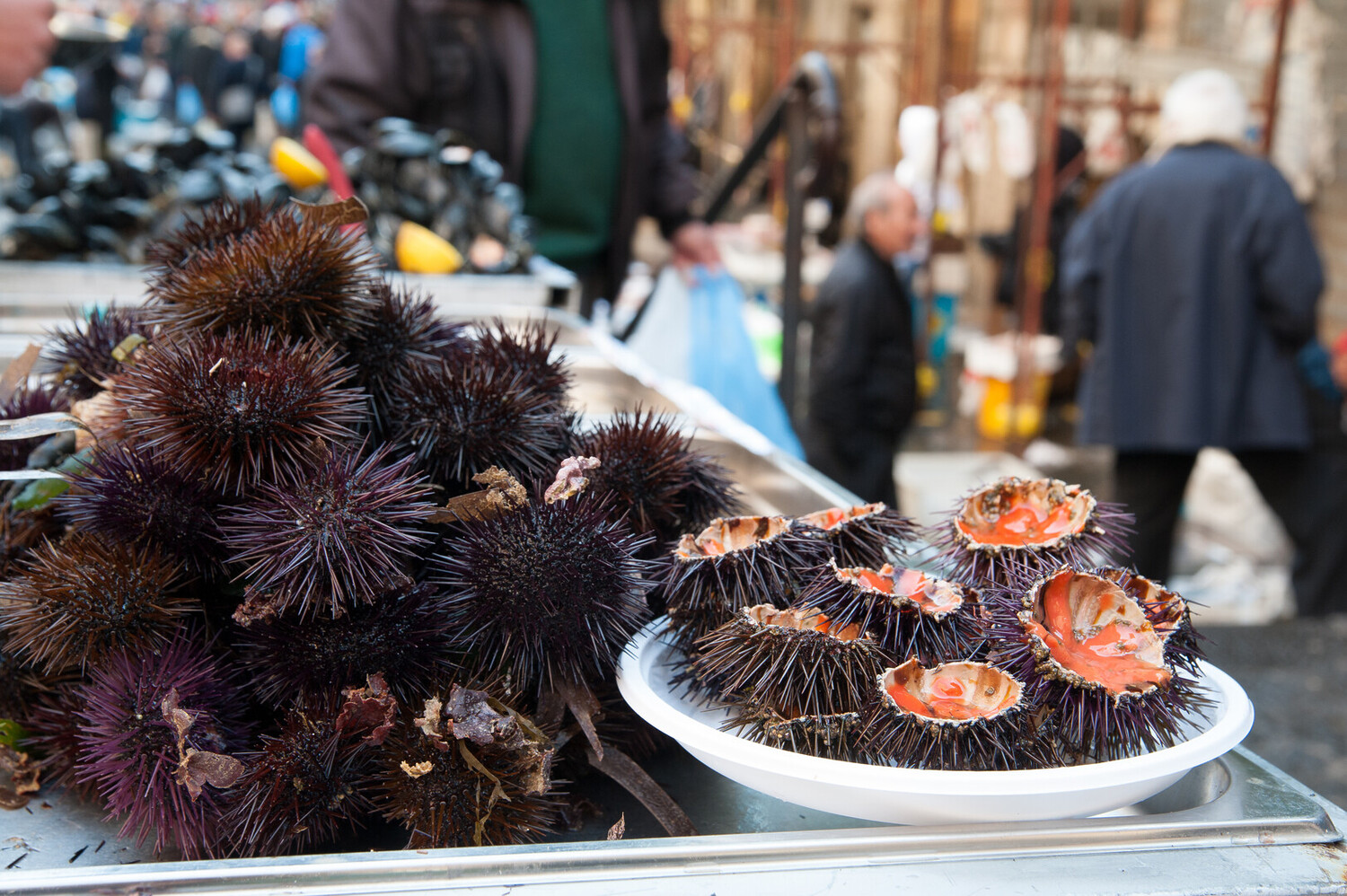
Start your visiting day at La Pescheria, the buzzing fish market tucked just behind Piazza del Duomo. It’s loud, messy, and completely unforgettable, a clash of fresh seafood, shouting vendors, and the salty air of the Ionian coast. Grab a raw oyster, bite into a hot arancino, and soak up the chaos. If you’re looking to truly visit Catania Italy like a local, this is where it all comes to life, fast, flavorful, and unfiltered.
Lose yourself in the Monastery of San Nicolò l’Arena
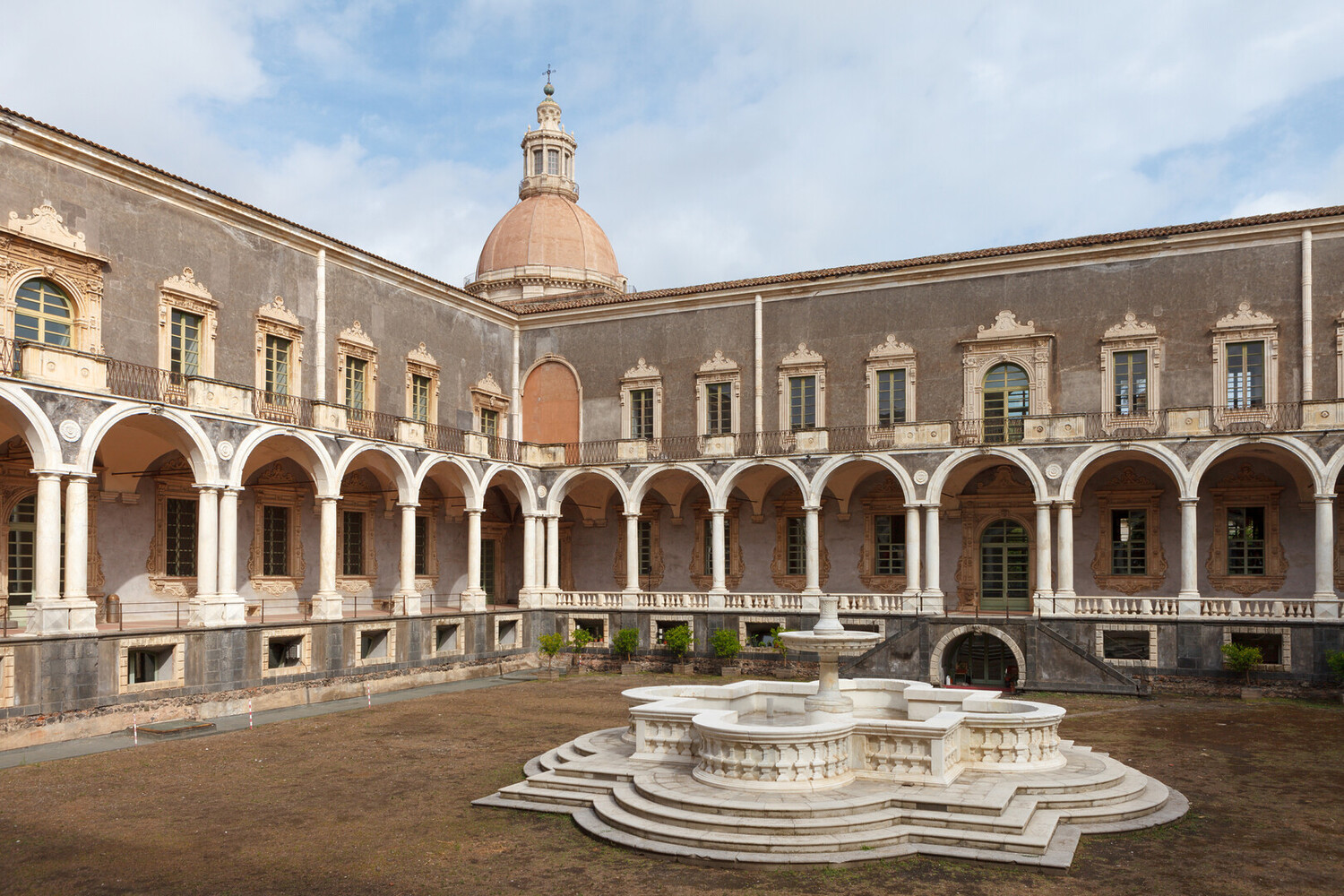
Step inside the Benedictine Monastery and you’ll forget you’re in the middle of a busy city. This UNESCO World Heritage Site is one of the largest monasteries in Europe, now housing the University of Catania’s humanities department. With its grand courtyards, sweeping staircases, and a striking blend of Baroque and Neoclassical architecture, it’s a quiet, inspiring stop that feels worlds away from the street noise outside, and absolutely worth exploring.
Marvel at the Teatro Massimo Bellini
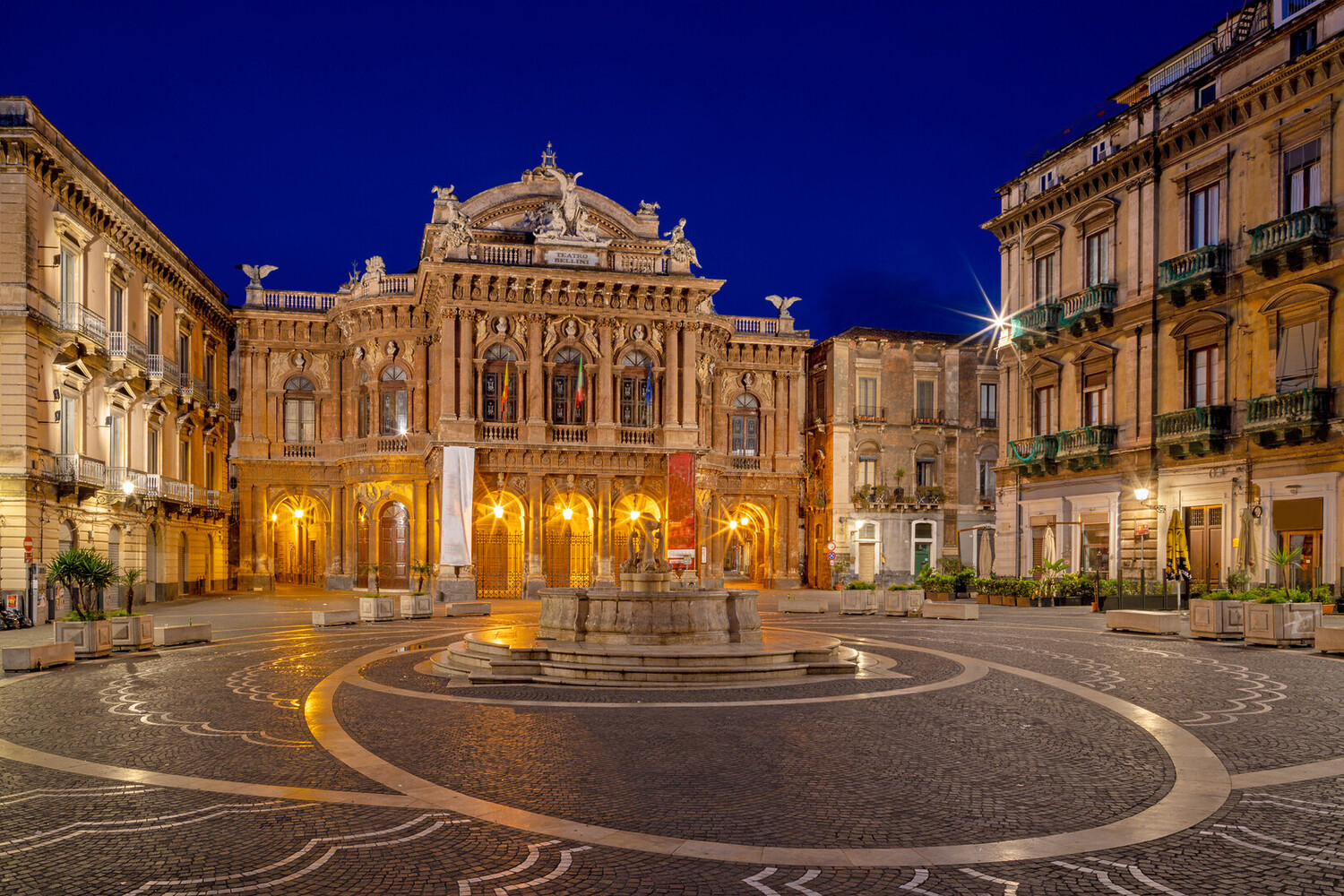
Named after Catania’s own Vincenzo Bellini, the Teatro Massimo Bellini is a jewel in the city’s cultural crown. With its red velvet seats, ornate stucco, and world-class acoustics, it rivals the great opera houses of Rome and Venice. Catching a performance here is more than just a night out, it’s a dive into local pride and timeless elegance. If you’re planning to visit Catania, Italy, don’t miss the chance to step inside this icon of Sicilian culture.
Visit Castello Ursino
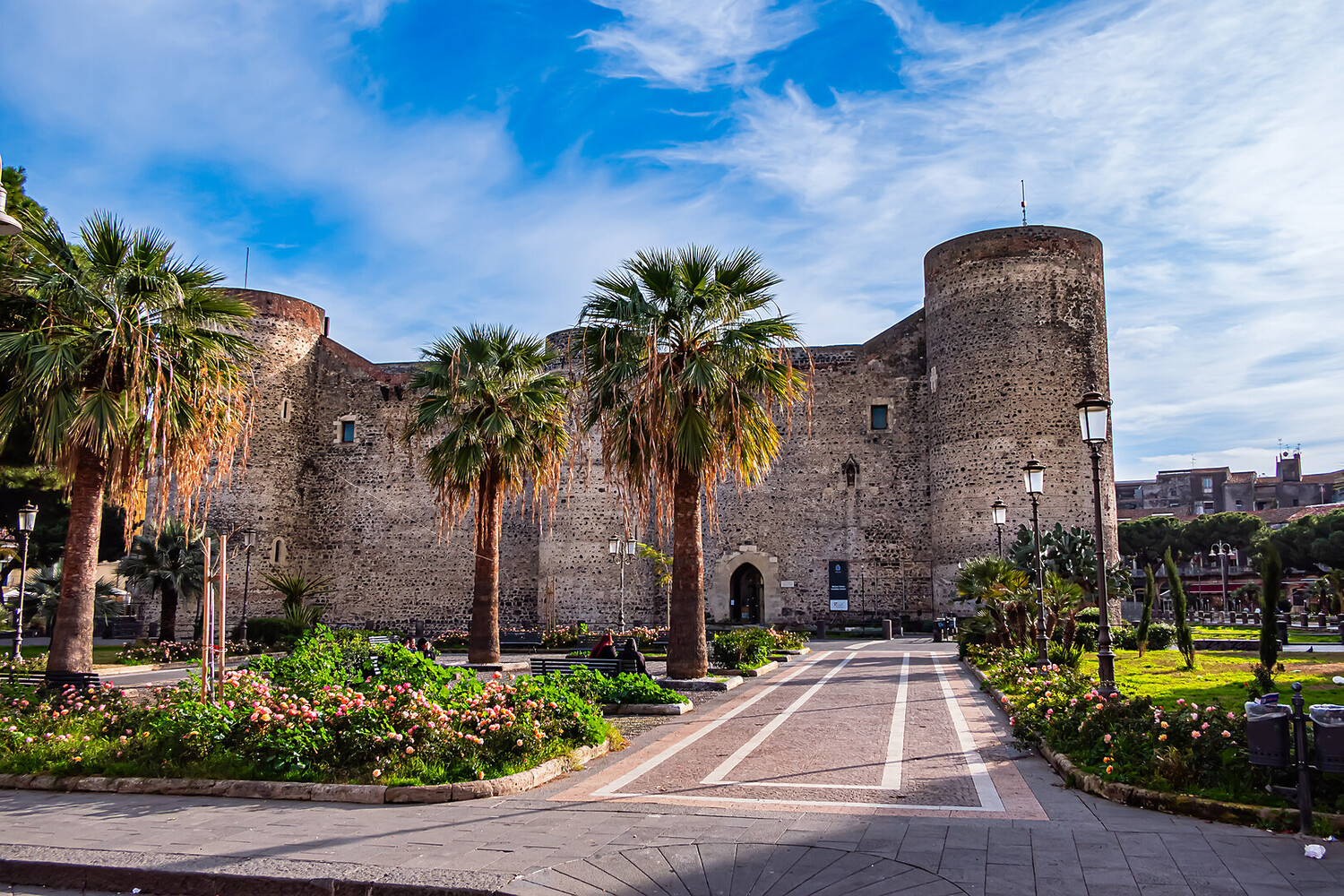
Castello Ursino was built in the 13th century under Emperor Frederick II, and it’s still standing strong, thanks in part to its thick lava-stone walls that held firm during the 1669 eruption. Today, this fortress houses the Museo Civico, where you can browse archaeological finds, centuries-old paintings, and relics that trace Catania’s fiery, fascinating past.
Relax in the Villa Bellini Gardens
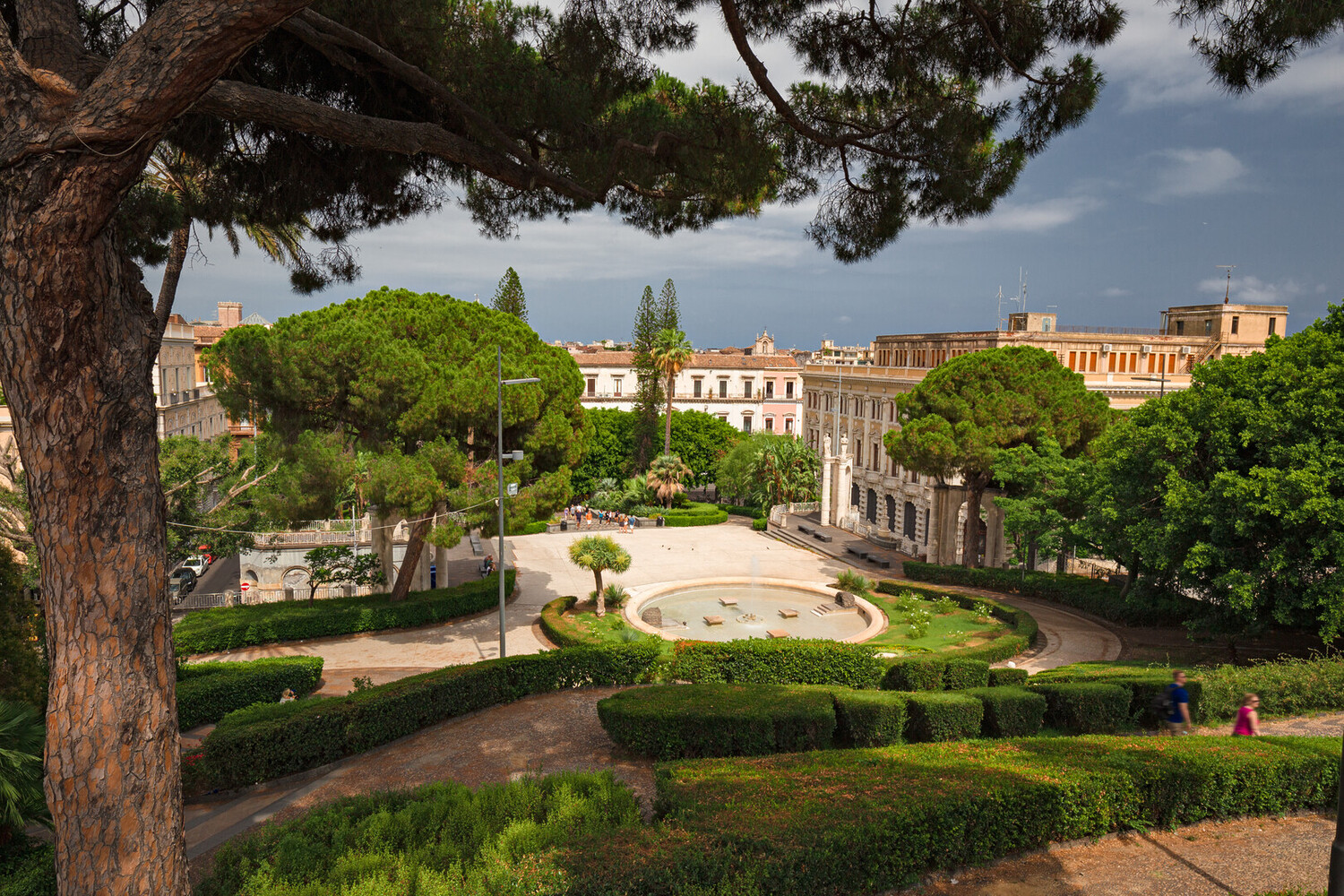
For a quiet break with Mount Etna on the horizon, head to Villa Bellini, one of Catania’s oldest and most beloved urban parks. Stroll past sculpted flower beds, ornate fountains, and leafy paths that open up to sweeping terraces. It’s the perfect spot to slow down, breathe in the city’s softer side, and watch the sky turn molten orange as the sun dips behind the volcano.
Visit Catania Italy and the best things to do around
Taste wine where time slows down

High in the Sicilian hills near Noto, this peaceful estate invites you to slow your pace and sip thoughtfully. Surrounded by olive trees and sun-drenched vines, the experience blends local food, traditional techniques, and easygoing hospitality.
Sip volcanic wines with a view

Set on the slopes of Mount Etna, this family-run winery pairs bold, mineral-rich wines with stunning views of the coast below. Walk through lava-stone cellars, taste organic vintages straight from the vineyard, and learn how the volcano shapes every drop. It’s a laid-back, unforgettable stop on any Etna wine tour.
Drive to the volcanic wonders of Mount Etna

Just a 45-minute drive from central Catania, Mount Etna dominates the skyline, and the imagination. As Europe’s highest active volcano and a UNESCO World Heritage Site, it offers a dramatic landscape shaped by centuries of eruptions. Hike the blackened trails, walk across cooled lava fields, and stop at panoramic viewpoints where the sea and city stretch out below you. The surrounding Etna wine region is just as impressive, with bold reds and crisp whites born from volcanic soil.
Uncover the coastal gem of Taormina
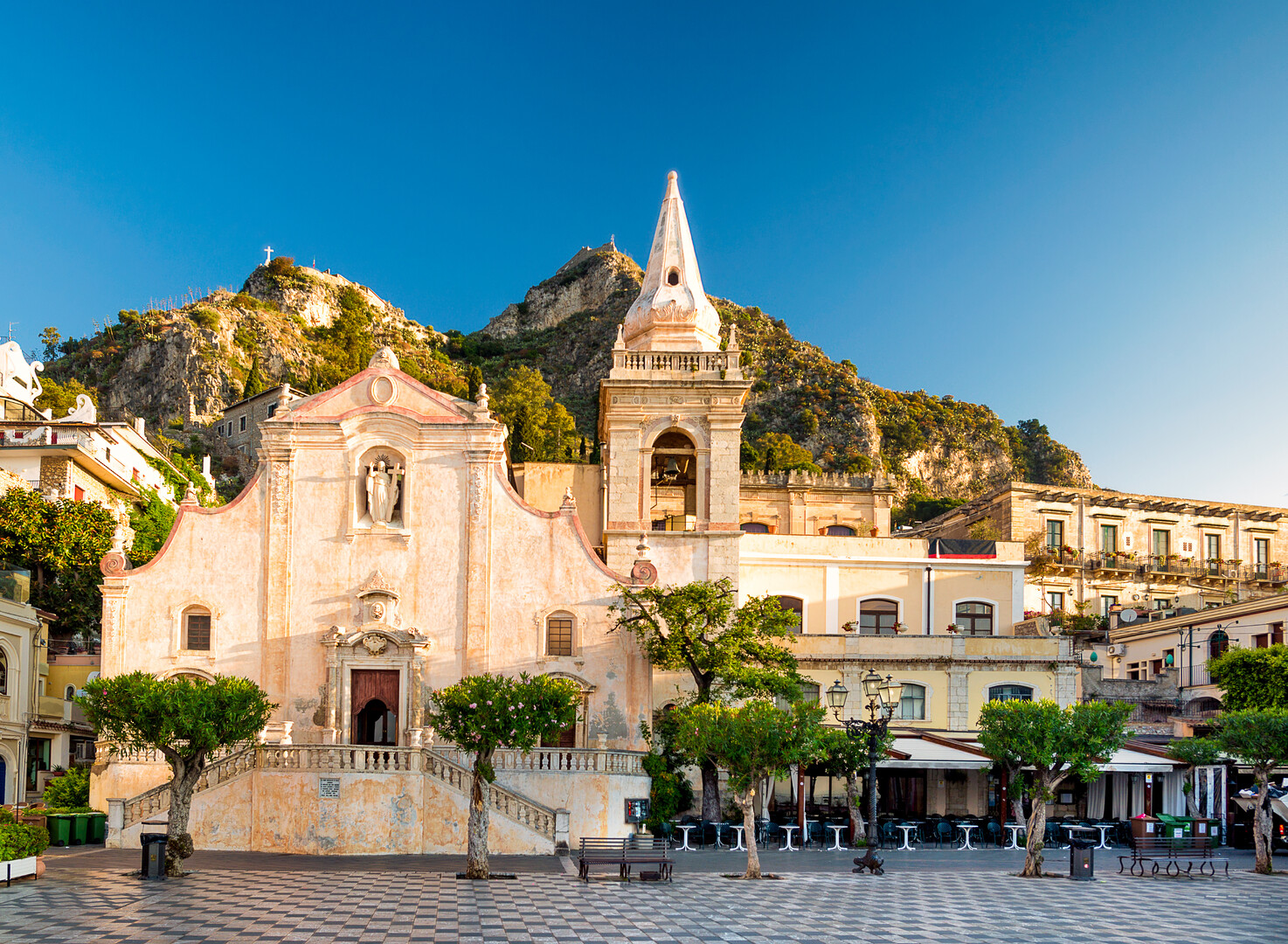
Just over an hour from Catania by car or public transport, Taormina is a postcard-perfect town perched high above Sicily’s eastern coast. With ancient ruins, luxury boutiques, and cliffside views that steal the show, it blends culture and beauty in a way that feels effortlessly cinematic. Stroll through piazzas framed by baroque facades, catch a show at the Greek Theatre, and don’t miss a sunset meal overlooking the sea. While you’re here, take time to explore Taormina wine tours, where you can sip elegant Etna wines just minutes from the vines.
Want the full coastal dream? Here’s why you need to visit Taormina Italy before everyone else does.
Step back in time in Baroque Syracuse
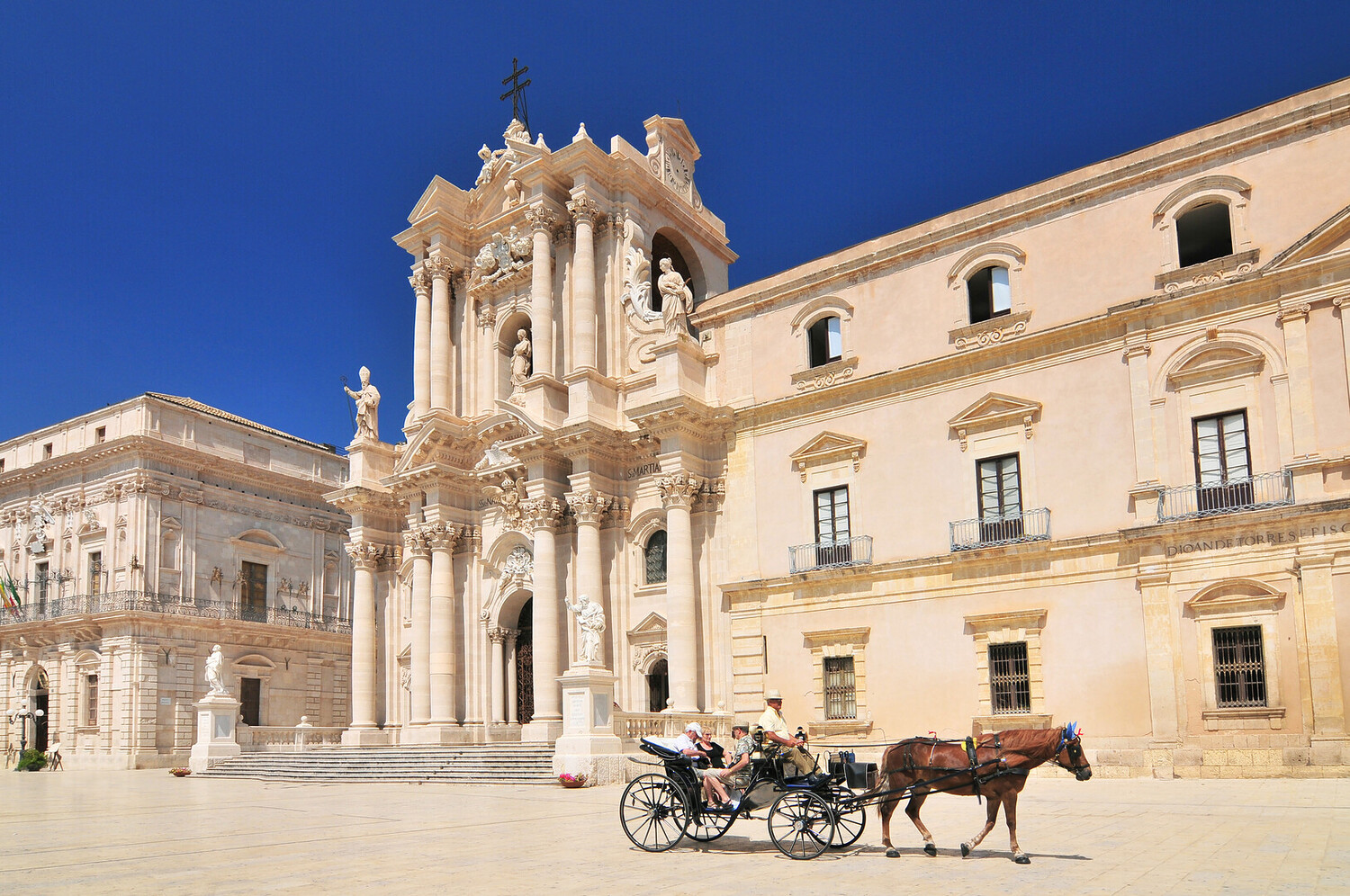
About 1 hour and 15 minutes south of Catania, Syracuse is a baroque jewel with an ancient soul. Once a major city of the Roman and Greek worlds, it’s now best known for the UNESCO-listed Neapolis Archaeological Park, home to one of the most impressive Greek theatres in Europe. Cross the bridge to Ortigia Island and you’ll find a maze of frescoed churches, sunny piazzas, and narrow streets that beg for slow wandering. While you’re in the area, don’t miss the chance to visit local Syracuse wineries, where tradition meets bold coastal flavors in every glass.
History, beauty, and a glass of something local, here’s why you should visit Syracuse Italy on your next Sicilian escape.
Explore the best places to visit in Sicily
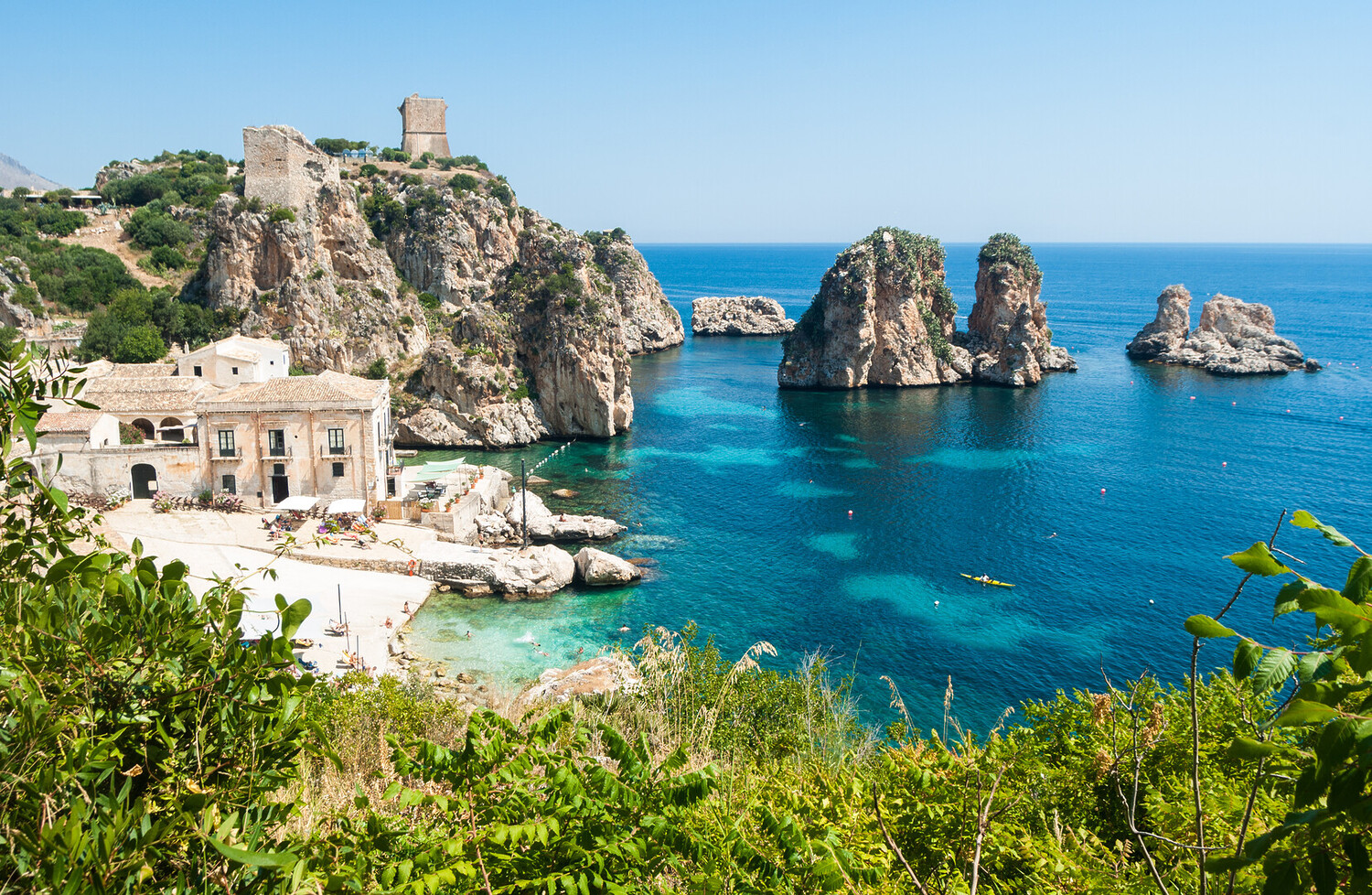
Sicily is a feast for the senses, every corner of the island offers something unforgettable. From the smoky slopes of Mount Etna to the sunlit baroque towns of Noto and Modica, this island blends natural beauty with deep-rooted culture. Wander through ancient ruins in Syracuse, dive into street food chaos in Catania, or sip local reds with a view in Taormina. Coastal gems like Cefalù and Isola Bella invite slow beach days, while inland towns reveal traditions that haven’t changed in centuries. These are just a few of the best places to visit in Sicily, and each one tells a different story you’ll want to bring home with you.
Good to know before visiting Catania
Is Catania safe?
Yes, Catania is generally safe. Like any larger city, it’s a good idea to stay aware of your surroundings and look after your belongings, especially in crowded areas or on public transportation. Petty crime like pickpocketing can occur in tourist hotspots, but violent crime is very rare. Stick to well-lit areas at night and follow common safety practices, and you’ll likely have a trouble-free experience.
What is the best time to visit Catania?
The best time to visit Catania is during the spring (April to June) and autumn (September to October) when the weather is pleasantly warm, and the city is less crowded. Summer months (July and August) can be very hot and busy, while winter is quieter but still enjoyable, temperatures remain mild compared to northern Italy, though some attractions may have reduced hours.
Is Catania worth visiting?
Absolutely. Catania is full of character, history, and unique landscapes. Located at the foot of Mount Etna, it offers a mix of stunning Baroque architecture, vibrant street life, traditional Sicilian food, and easy access to natural wonders. It’s a great base to explore the eastern coast of Sicily, and its gritty charm contrasts with other more polished Italian cities, in a good way.
How many days do you need in Catania?
To fully enjoy Catania, plan on spending at least 2 to 3 days. This allows time to explore major sights like the Piazza del Duomo, Catania Cathedral, the Roman Amphitheater, fish market, and take a day trip to Mount Etna. If you want to delve deeper into the region, add a few more days to include nearby towns like Taormina or Syracuse.
Why is Catania called “The Black City”?
Catania is nicknamed “The Black City” due to the widespread use of black lava stone from Mount Etna in its buildings and streets. Many churches, palaces, and roads are built using this dark volcanic rock, giving the city a distinctive and dramatic look. It’s a unique aspect of Catania’s architectural identity and a nod to its close relationship with the nearby volcano.
What are the best hotels in Catania?
Best hotels in Catania:
- Palace Catania | UNA Esperienze – A centrally located 4-star hotel featuring rooftop dining with views of Mount Etna.
- Il Principe Hotel Catania – Stylish accommodation in the heart of the historical center, close to major landmarks.
- Duomo Suites & Spa – Boutique luxury hotel steps away from Piazza del Duomo with modern rooms and spa services.
- Liberty Hotel – Elegant early 20th-century building offering charming rooms and classic décor.
What are the best restaurants in Catania?
Top restaurants to try Sicilian cuisine:
- Trattoria Casalinga – A traditional local eatery known for home-style Sicilian dishes at great prices.
- Osteria Antica Marina – Located near the fish market, this is a top spot for fresh seafood and authentic Sicilian recipes.
- Cutilisci – A cozy restaurant serving Sicilian pizza and seafood, famous for its creative menus using local ingredients.
- Il Sale Art Café – Modern yet rooted in Sicilian culinary traditions, known for creative plating and local wines.
- Pasticceria Savia – Don’t miss this institution for traditional Sicilian sweets like cannoli and cassata.
What makes a trip to Catania special?
What makes Catania stand out is its unique blend of history, culture, and natural beauty. Whether you’re wandering through its lively markets, exploring stunning Baroque architecture, or taking a cable car to the upper slopes of Mount Etna, there’s a tangible link between the city’s past and present. Combining coastal charm with volcanic grit, it’s a destination unlike any other in Italy.

Victoria explores Europe's wine regions to share the finest wine tourism experiences with our travelers. Here she shares her favorite discoveries, tips, and encounters with the winemakers behind every bottle.