



Green crater lakes, black volcanic rock, hydrangea hedges running along the road, and the smell of sulfur drifting from a hot spring — the Azores archipelago packs an entire continent’s worth of landscape into nine small volcanic islands scattered across the Atlantic Ocean. Whether you land in Ponta Delgada for a long weekend or plan a full week hopping between São Miguel, Pico and Terceira Island, this itinerary gives you a realistic, day-by-day structure to follow or adapt.
A realistic Azores itinerary starts with 4-5 days on São Miguel Island (Ponta Delgada, Sete Cidades, Lagoa do Fogo, Furnas), flying into Ponta Delgada Airport and renting a car to get around. For a full week or longer, add Pico Island for its wine country and Pico Mountain, or Terceira Island for Angra do Heroísmo, connecting islands by domestic flight or ferry.
If you’re a wine lovers like we are at Winalist, you might also want to check out the best wine tours in the Azores before you go.
How to plan your Azores itinerary?
Before mapping out each day, it helps to answer three questions: how many days you have, which islands you’ll combine, and how you’ll get around once you land. The Azores islands reward slow travel — distances are short, but roads wind around calderas and coastline, so plan fewer stops per day than you would on mainland Portugal.
How many days do you need in the Azores?
Two or three days on São Miguil island are enough for a taste of the archipelago — Ponta Delgada, Sete Cidades and Furnas fit into a long weekend. For a fuller island itinerary, five days on São Miguel let you add Lagoa do Fogo, Caldeira Velha and the east coast without rushing. A full week in the Azores, or longer, opens the door to a second island — Pico for wine country, or Terceira Island for its UNESCO World Heritage site — turning a short trip into a proper multi-island Azores trip.
Which islands to combine — São Miguel, Pico, Terceira?
São Miguel is the largest island in the Azores and the natural base for any itinerary for the Azores, with the only major international airport. Pico Island, recognizable by its volcano, is the place to add wine country and a hike (or view) of Pico Mountain — Portugal’s highest peak. Terceira Island brings Angra do Heroísmo’s colorful colonial architecture and another rhythm entirely. Most travelers pair São Miguel with one of these two rather than attempting all three in a single trip.
Getting there — flights into Ponta Delgada
Most itineraries begin with a flight into João Paulo II Ponta Delgada Airport, on São Miguel Island. Azores Airlines runs regular routes from mainland Portugal (Lisbon, Porto) and seasonal connections from the United States, making it realistic to fly directly from the East Coast without a stop in continental Europe. Flight time from Lisbon is roughly two hours; from the U.S. East Coast, expect a transatlantic flight of around five hours.
Getting around — car rental vs. ferry vs. domestic flights
A rental car is essential on São Miguel — public transport won’t get you to Sete Cidades, Lagoa do Fogo or Furnas on any kind of schedule that suits sightseeing. Book your car rental in advance, especially in summer, since cars in the Azores are in limited supply on the smaller islands. To move between islands, Atlanticoline ferries connect Pico, Faial and São Jorge Island in the central group, while short domestic flights on Azores Airlines link São Miguel to Terceira, Pico or Santa Maria Island when a ferry route isn’t practical.
Day 1 — Arrival and Ponta Delgada
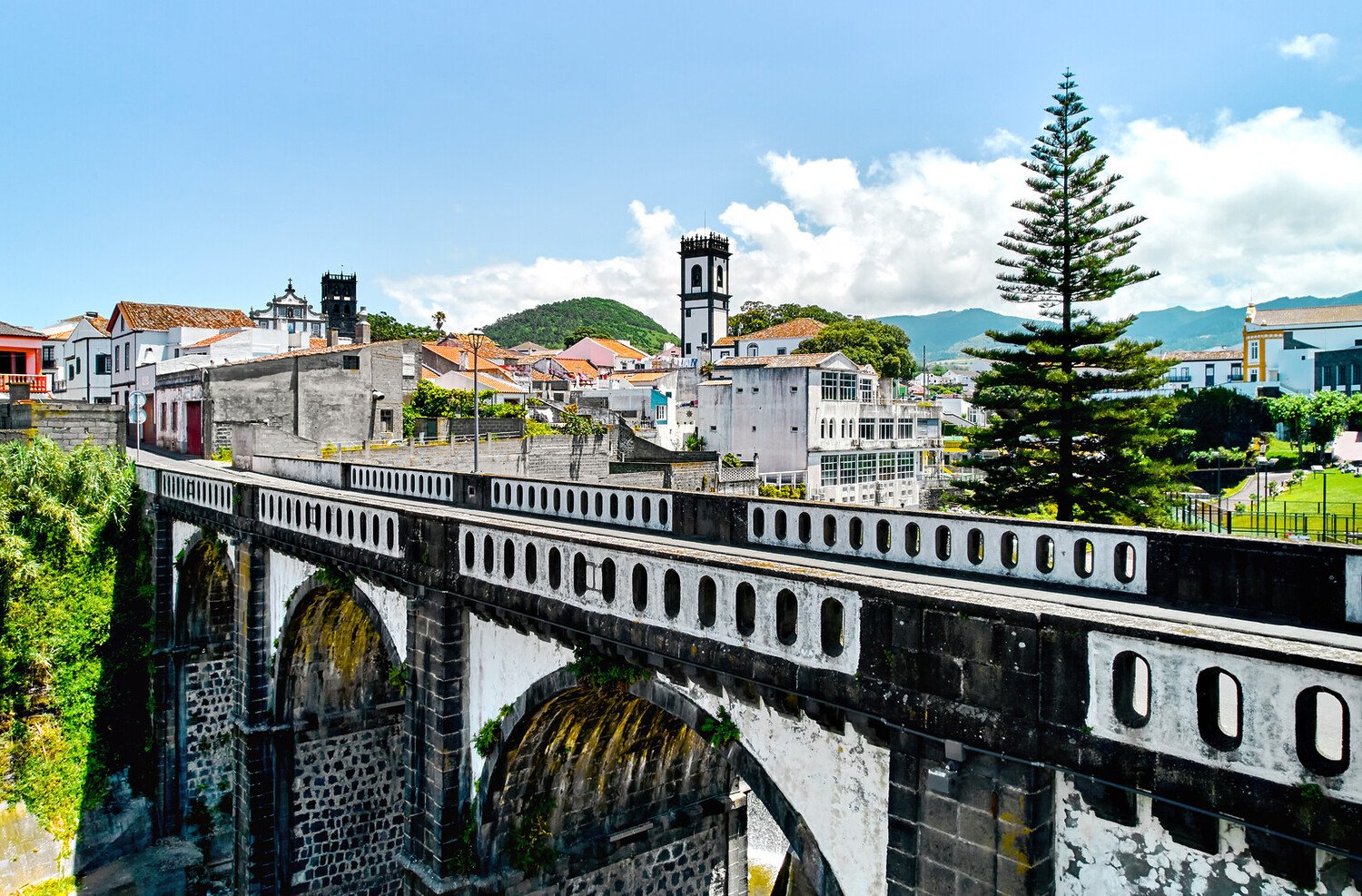
Land at Ponta Delgada and pick up your rental car
Your Azores itinerary starts at Ponta Delgada Airport, on the south coast of São Miguel Island. Pick up your rental car directly at the airport — nearly every agency has a counter there — and count on a short drive into the city center, often under fifteen minutes. Give yourself the rest of the day to settle in and adjust to the pace of the island.
Wander through Ponta Delgada’s historic center
Ponta Delgada’s old town is compact enough to explore on foot in an afternoon. The black-and-white basalt-and-limestone pavement, the three arches of the Portas da Cidade gate, and the waterfront marina are all within walking distance of each other. Stop for lunch at one of the restaurants around the marina before an early dinner — jet lag from the flight tends to catch up fast on day one.
Day 2 — Sete Cidades and the west side of São Miguel
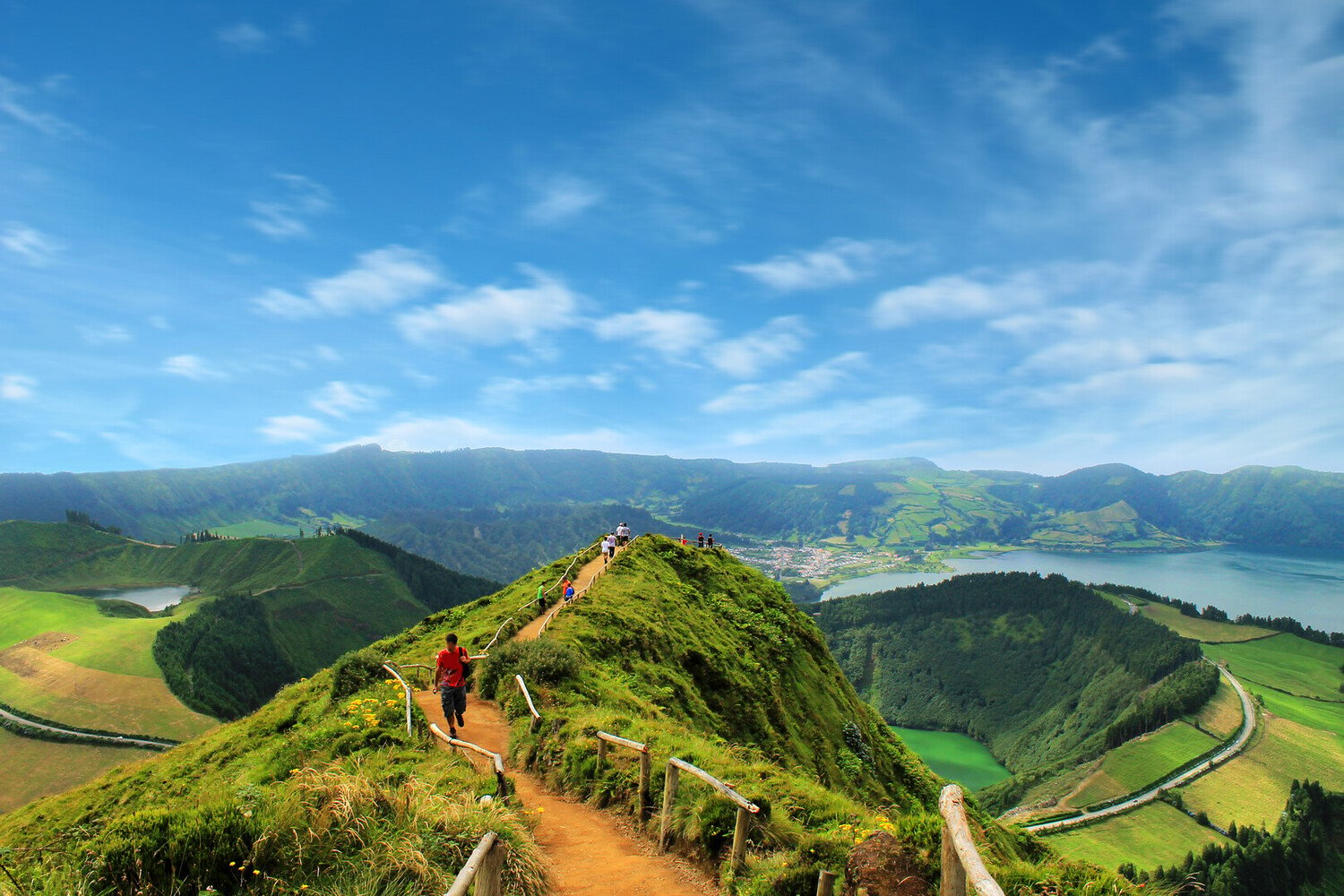
Discover the crater lakes of Sete Cidades
Drive about 40 minutes from Ponta Delgada to reach Sete Cidades, the volcanic crater on the west side of the island famous for its twin lakes — one blue-toned, one green-toned, depending on light and algae. The Miradouro da Vista do Rei is the classic viewpoint over the crater; from there, a walking loop drops down into the town of Sete Cidades itself, nestled between the two lakes.
Stop at the miradouros on the west side of the island
The west side of São Miguel is dense with miradouros (viewpoints) worth a short detour on the way back — Miradouro da Boca do Inferno overlooks the crater from a different angle, adding another layer to the volcanic landscape you’ve just walked through. Plan a half-day for this part of the island if you want to linger at each stop rather than rush the loop.
Day 3 — Lagoa do Fogo and Caldeira Velha
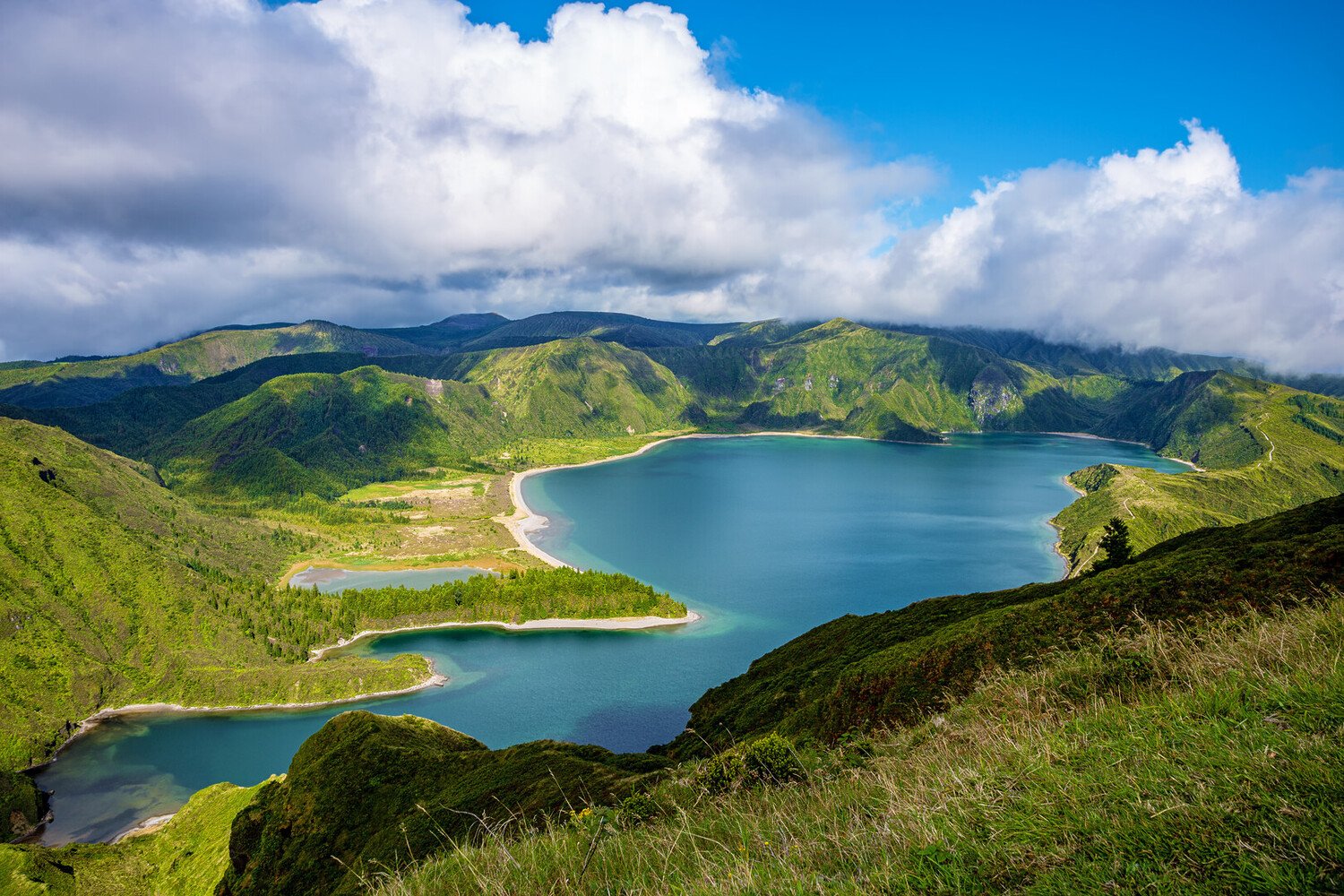
Hike around Lagoa do Fogo
Lagoa do Fogo sits in a volcanic crater near the center of São Miguel Island, and it’s one of the more scenic stops on any São Miguel itinerary. The lake is often wrapped in cloud, so check the weather before committing to the full hike down to the shoreline — when it clears, the crater and lake below make for one of the island’s best short hikes.
Soak in the hot spring at Caldeira Velha
On the way back toward the coast, Caldeira Velha offers a natural hot spring fed by a small waterfall, with warm, iron-rich water pooling among ferns and volcanic rock. It’s a natural way to end a day built around hiking — bring a swimsuit and a towel, since the water here stains light fabrics due to its mineral content.
Day 4 — Furnas and the tea plantations
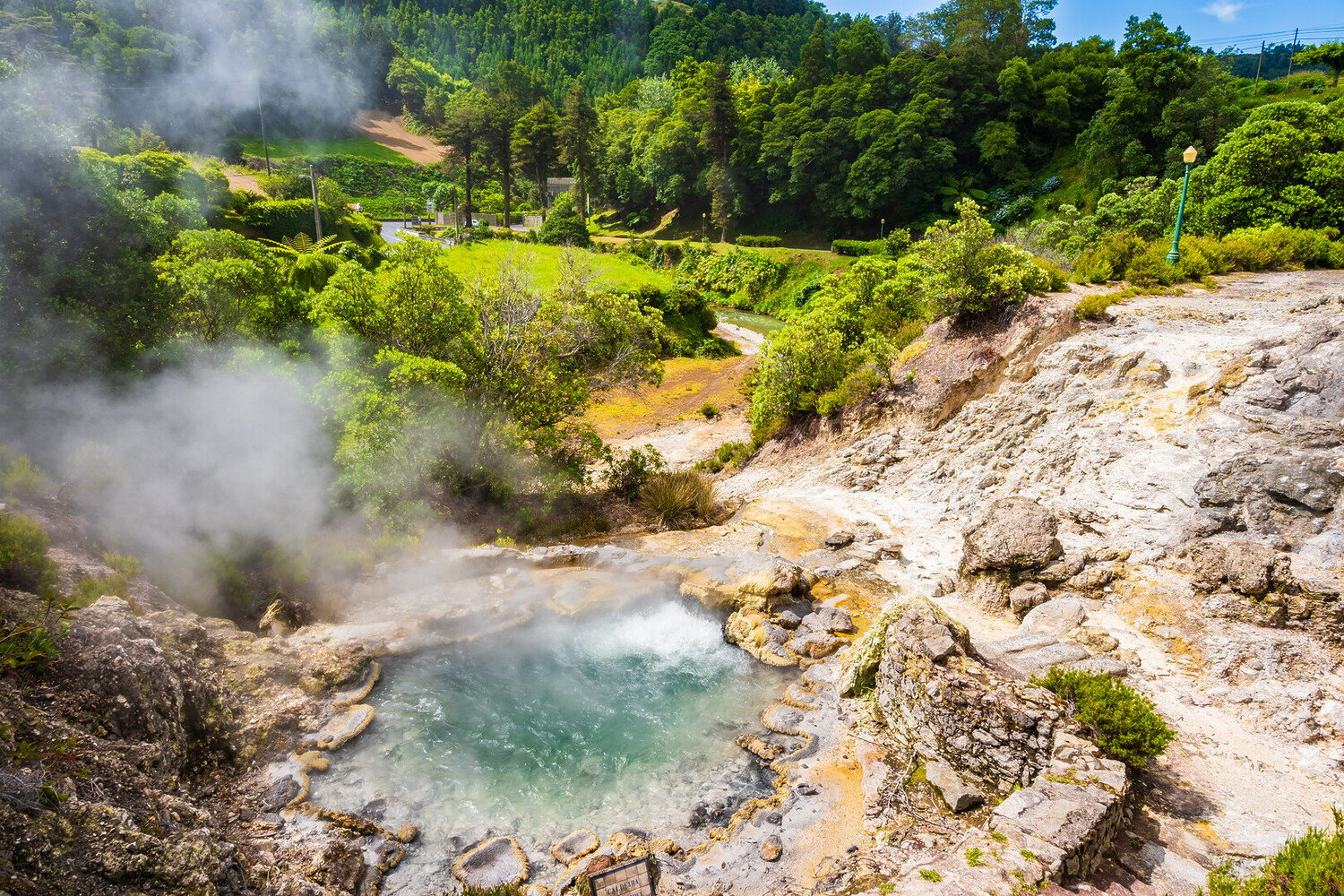
Experience Furnas’ hot springs and the cozido tradition
Furnas is built almost entirely around its geothermal activity — fumaroles steam through the ground in the middle of the village, and this is where the Azorean specialty cozido das Furnas is slow-cooked underground using volcanic heat. Try it for lunch at one of the local restaurants, then walk through Terra Nostra Park, where a hot spring pool tinted orange by iron oxide sits in the middle of a botanical garden filled with hydrangea and other flowering plants.
Visit a tea plantation on São Miguel
A short drive from Furnas brings you to one of São Miguel’s tea plantations, among the only ones in continental Europe still producing tea commercially. Rows of tea bushes line the hillside facing the Atlantic Ocean — a quick stop here rounds out the agricultural side of the island before heading back toward Ponta Delgada.
Add a wine-tasting stop on São Miguel
The Azores’ volcanic soil doesn’t only grow tea — it produces distinctive wines too, and a tasting stop fits naturally into day four before or after Furnas. For the full picture of the archipelago’s wine regions and appellations, see our guide to the best wine tours in Azores, where you can book a tasting with instant confirmation and free cancellation on most experiences.
Day 5 — East coast and Ribeira dos Caldeirões
Look out from Miradouro da Ponta do Sossego
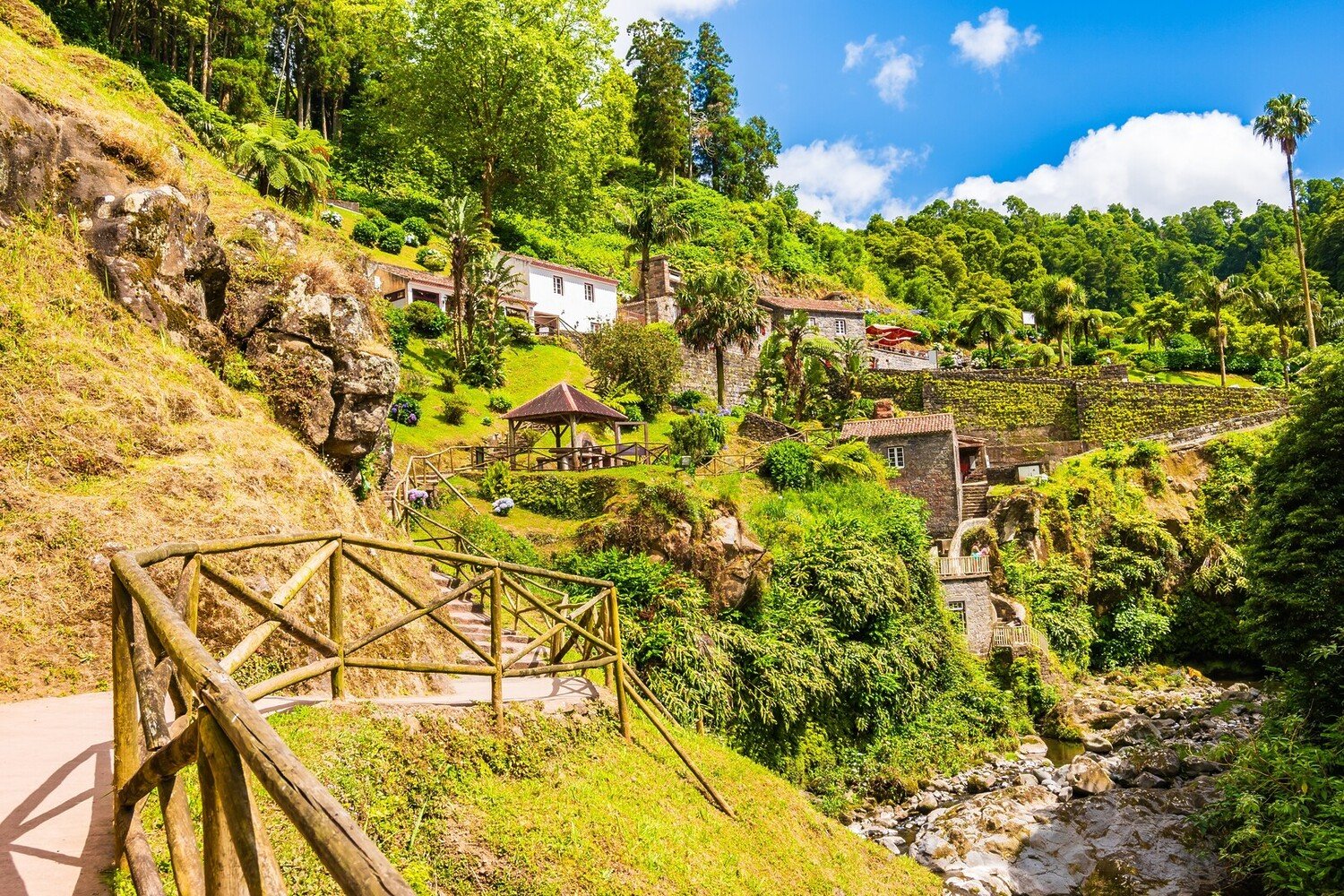
Day 5 heads toward the eastern coast of São Miguel, where Miradouro da Ponta do Sossego offers a landscaped garden viewpoint over cliffs and open ocean — a quieter, less-visited stop compared to Sete Cidades or Lagoa do Fogo, but one of the prettiest on this side of the island.
Walk through Ribeira dos Caldeirões Natural Park
Close by, Ribeira dos Caldeirões Natural Park is built around a series of small waterfalls and an old restored watermill, with short walking paths through dense greenery. It’s an easy, low-effort stop to close out your time on São Miguel before deciding whether to extend the trip to a second island.
Extending your trip — adding Pico or Terceira Island
Fly or ferry to Pico Island for wine country and Pico Mountain
From São Miguel, a short domestic flight or a combination of flight and ferry gets you to Pico Island, dominated by the volcano of the same name — the highest point in Portugal. Pico’s landscape is unlike São Miguel’s: black volcanic rock walls (currais) divide small vineyard plots planted directly into the lava rock, a UNESCO-recognized landscape built to shelter vines from Atlantic wind and salt spray.
Visit a vineyard on Pico
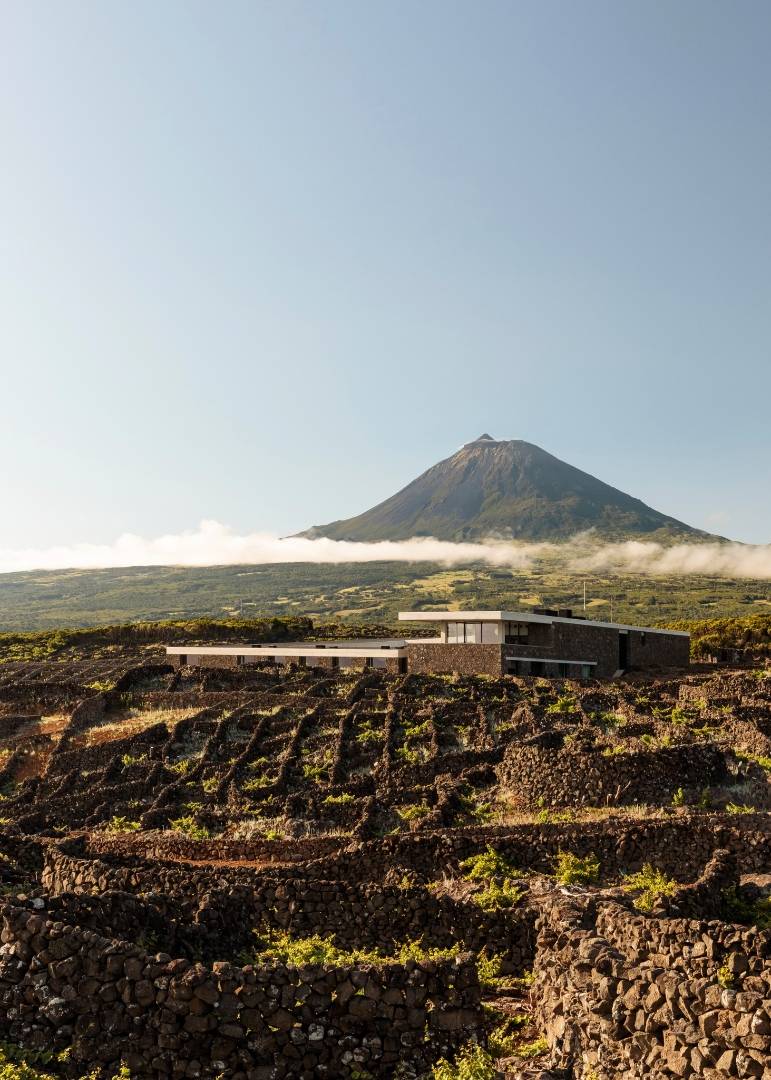
Wine has been made on Pico for centuries, and walking through the curral-divided plots is one of the more distinctive experiences in the whole archipelago. For the details on Pico’s wine appellation — grape varieties, protected designation, soil — see our dedicated page on Pico’s wine appellation, and consider booking a tasting through Adega A Buraca, where visitors walk through the vineyard plots before a guided cellar tasting, or Materramenta, which pairs a vineyard walk with a tasting focused on the island’s volcanic terroir.
Explore Angra do Heroísmo on Terceira Island
If Terceira Island is your second stop instead, Angra do Heroísmo is the reason to go — a UNESCO World Heritage Site since 1983, with colorful colonial-era architecture built during the island’s time as a key Atlantic port between Europe and the Americas. It’s a different pace again from São Miguel or Pico, worth two or three days on its own if your schedule allows a longer Azores trip.
Logistics recap: planning your trip to the Azores
Check the season and weather before you go
Weather in the Azores is mild year-round thanks to the Atlantic Ocean, but rain is frequent regardless of season — pack layers and a waterproof jacket no matter when you go. Summer months bring the most stable weather and are the most popular time to visit the Azores, though also the busiest for car rental availability.
Book your car rental and accommodation in advance
Because cars in the Azores are limited, especially on smaller islands like Pico or Terceira, book your rental car and accommodation well ahead of your trip to the Azores rather than on arrival. This matters even more in summer.
Use Google Maps and ferry schedules to connect islands
Google Maps works well for driving routes around each island, but doesn’t always reflect Atlanticoline’s ferry schedules between islands — check those directly before finalizing which days you’ll travel between São Miguel, Pico, São Jorge or Terceira, since frequency varies by season and by route.
Extend your Azores itinerary
Five days on São Miguel Island covers the highlights, but the Azores archipelago has eight more volcanic islands scattered across the Atlantic Ocean, and a few of them fit naturally onto a longer itinerary. If your trip to the Azores allows for more than a week, here are the extensions worth building into your plan, each reachable from Ponta Delgada by short flight or ferry.
Fly to Pico Island for wine country and the Azores’ tallest volcano
A 45-minute flight from Ponta Delgada puts you on Pico Island, home to the black volcanic-rock vineyards planted between low stone walls (currais) and Pico Mountain, the highest point in Portugal. Give it a full day, or two if you plan to hike the volcano itself. The vineyards here are a UNESCO World Heritage Site, and it’s worth pairing the visit with a proper tasting rather than just a drive-by photo stop. For the full picture on the appellation, soils, and grape varieties, our Pico wine appellation guide goes deeper than we can here; you can also browse bookable tastings directly on the Azores wine-tourism page.
Cross over to Faial Island for a coastal detour
A 30-minute ferry from Pico’s Madalena port gets you to Faial Island, known for its marina at Horta and the Capelinhos volcano site on its west side. It’s a natural add-on for travelers already island-hopping to Pico — count on half a day for the crossing and a walk around Horta, or a full day if you want to see the volcanic crater at Capelinhos too.
Sample São Jorge cheese on São Jorge Island
São Jorge Island sits a short ferry ride from both Pico and Faial and is worth a stop for anyone building a longer, multi-island itinerary. Beyond the dramatic coastal fajãs, it’s the source of São Jorge cheese, a Portuguese classic you’ll already have tasted at breakfast or lunch tables on São Miguel. A day trip is enough to see the main viewpoints and taste the cheese at its source.
Walk the streets of Angra do Heroísmo on Terceira Island
Terceira Island is roughly a 50-minute flight from Ponta Delgada and makes sense if you’re combining São Miguel and Terceira into a single Azores trip rather than adding Pico. Angra do Heroísmo, its historic capital, is a UNESCO World Heritage Site thanks to its 16th-century architecture and role as a former Atlantic trading post. Plan on a full day here, plus extra time if you want to see the island’s own volcanic craters and coastline.
Watch for whales off Pico or São Miguel’s coast
Whale watching isn’t tied to one island in particular — boats leave from both Ponta Delgada and Pico’s ports, and the deep Atlantic waters around the archipelago attract sperm whales and several dolphin species year-round. If you have a spare half-day anywhere in your itinerary, it’s worth slotting in regardless of which island you’re based on.
Good to know before visiting the Azores
How many days do you need for an Azores itinerary?
A well-paced Azores itinerary needs a minimum of 7 days if you’re focusing on a single island like São Miguel, and 10 to 14 days if you want to combine two or three islands (commonly São Miguel, Pico, and Faial, or São Miguel and Terceira). Because inter-island flights and ferries depend on weather and limited schedules, building in a buffer day or two is a smart move rather than a strict back-to-back itinerary.
Which islands should you include in a first Azores itinerary?
For a first trip, most visitors start with São Miguel, the largest and most accessible island, home to the Sete Cidades crater lakes, the Furnas hot springs, and Lagoa do Fogo. If you have more time, pairing it with Pico (known for its volcano and vineyard landscape, a UNESCO World Heritage Site) and Faial (with its marina town of Horta) makes for a natural triangle, since these two islands are close together and connected by short ferry rides. Terceira and São Jorge are also popular add-ons for travelers with 10+ days.
What is the best time of year to visit the Azores?
The Azores are a year-round destination thanks to their mild, oceanic climate, but the most stable weather generally falls between June and September, making it the preferred window for hiking, whale watching, and swimming. May and October offer a good compromise with fewer crowds and lower prices, though rain showers are more frequent. Winter (November to March) is quieter and greener but comes with more unpredictable weather and rougher seas, which can affect boat-based activities.
How do you get around the Azores?
Renting a car is the most practical way to explore each island, since public transport is limited and many of the best viewpoints (miradouros), crater lakes, and villages sit outside town centers. On São Miguel especially, a rental car (or private tour driver) gives the flexibility to reach spots like Sete Cidades or Furnas at your own pace. To move between islands, you’ll rely on short regional flights operated by SATA/Azores Airlines or, for closer islands like Faial and Pico, a public ferry service.
Where should you base yourself in the Azores?
On São Miguel, Ponta Delgada is the natural base for its restaurants, airport proximity, and central location for day trips to Sete Cidades, Lagoa do Fogo, and Furnas. If you’re spending a few nights in the eastern part of the island, Furnas itself makes a scenic alternative thanks to its thermal springs and cozy guesthouses. On Pico, Madalena or São Roque do Pico work well as bases for exploring the vineyards and climbing Pico mountain, while on Faial, Horta is the go-to hub for its marina and ferry connections.
What are the best places to stay in the Azores?
Accommodation on the islands ranges from boutique hotels to countryside guesthouses, and choices depend on which island you’re basing yourself on:
- Ponta Delgada (São Miguel): options here suit travelers who want walkable access to restaurants and shops, plus quick departures for day tours.
- Furnas (São Miguel): smaller guesthouses and spa-style hotels here take advantage of the natural thermal waters, ideal for a relaxed 1-2 night stay.
- Horta (Faial): hotels near the marina put you close to the ferry terminal for Pico day trips and within walking distance of the town’s famous painted sea-wall murals.
- Madalena (Pico): a practical base with sea views toward Faial, convenient for wine route visits and the Pico mountain trailhead.
Booking ahead is recommended in peak summer months (July-August), as room availability on smaller islands is limited compared to mainland Portugal.
What are the best restaurants to discover local food in the Azores?
Azorean cuisine centers on fresh seafood, slow-cooked meats, and local dairy, and trying it is one of the highlights of any itinerary. In Ponta Delgada, restaurants around the marina and old town serve classics like lapas (limpets), polvo (octopus), and the island’s famous pineapple-based desserts, since São Miguel pineapples are grown locally in greenhouses. In Furnas, look for restaurants or informal spots serving cozido das Furnas, the traditional stew slow-cooked underground using the area’s geothermal heat — a dish tied directly to the island’s volcanic landscape. On Faial and Pico, harbor-side restaurants in Horta and Madalena are known for grilled fresh fish and local cheeses, often paired with wine from Pico’s UNESCO-listed vineyards.
Do you need to book activities like whale watching in advance?
Yes, especially in peak season (June to September), when demand for whale watching, canyoning, and diving tours is highest and boat capacity is limited. Booking a few days to a couple of weeks ahead is generally advisable, both to secure your preferred time slot and because trips can be rescheduled or cancelled last-minute due to sea conditions.
Is it possible to explore the Azores without a rental car?
It’s possible but more limiting, particularly outside Ponta Delgada. Some visitors rely on organized day tours or private drivers, which cover the main sights like Sete Cidades, Lagoa do Fogo, and Furnas without the need to navigate yourself. Public buses exist on São Miguel but run on limited schedules geared toward locals rather than tourists, so they’re not always convenient for reaching remote miradouros or trailheads early in the day.
What should you pack for an Azores itinerary?
Layered clothing is essential, since weather can shift quickly between sun, wind, and rain even within a single day, regardless of season. A waterproof or windproof jacket, comfortable hiking shoes for trails like Sete Cidades or the Pico mountain climb, and swimwear for thermal pools and coastal swimming spots are all worth including. Because many hikes involve volcanic terrain and unpredictable microclimates, having proper footwear and a light rain layer matters more here than in typical mainland Portugal travel.


